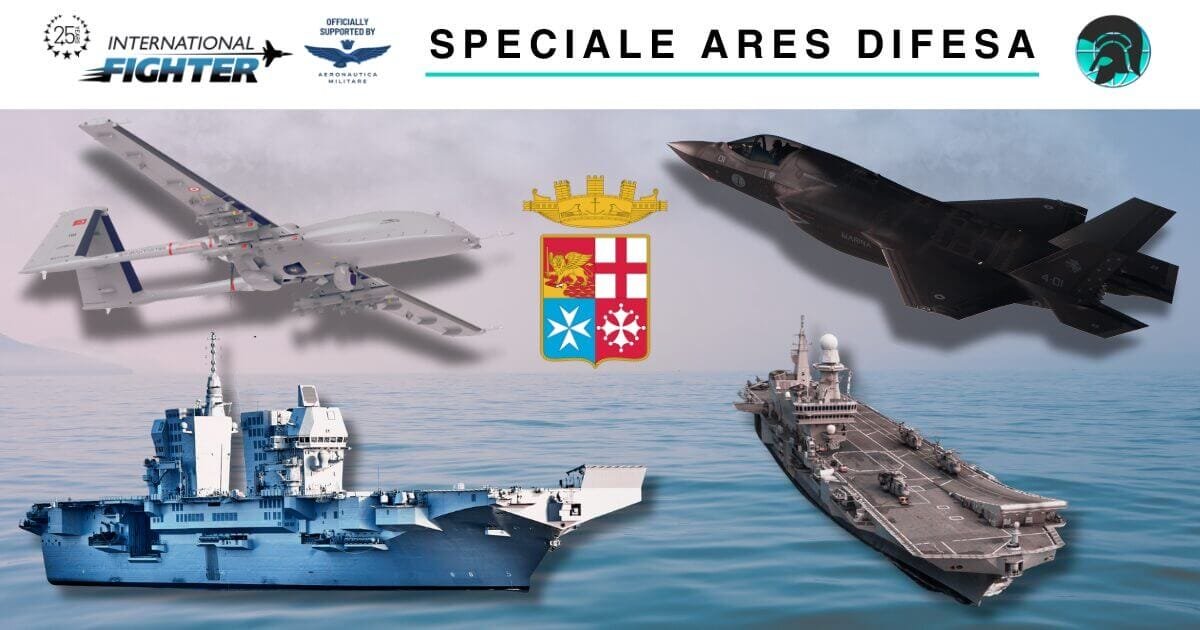
The Transformation of the Italian Navy: Towards Full Fifth-Generation Capability with F-35 and Drones
The Italian Navy is undergoing one of the most significant stages of its strategic and technological evolution.
This journey, outlined in a speech at the International Fighter Conference, is not just about introducing new weapons systems, but also involves a rethink of the operational doctrine, training, and inter-force cooperation.
From Harrier to F-35B

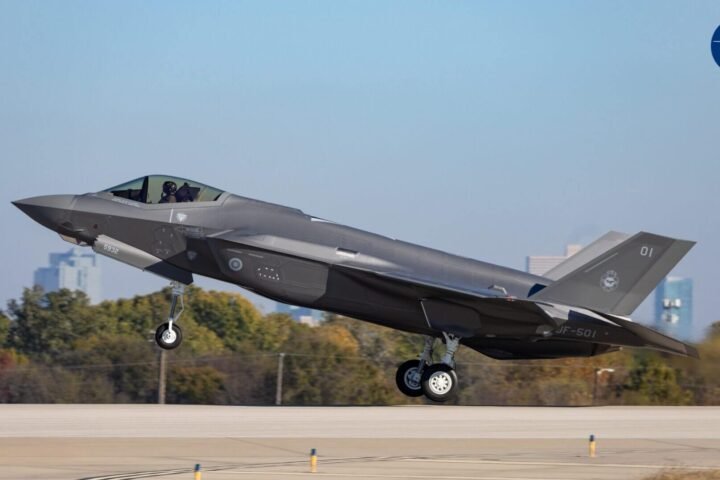
The upgrade of the aircraft carrier ITS Cavour to accommodate F-35B aircraft marked the beginning of a structural and conceptual transformation. The operational certification, completed in collaboration with the Joint Program Office in the United States, facilitated the declaration of the Initial Operational Capability (IOC) in 2024.

The transition from the lighter AV-8B Harrier II, with a maximum takeoff weight of 14 tons, to the nearly 30-ton fifth-generation STOVL fighter required a deep reinforcement of the flight deck, systems revision, and logistical update.
The new amphibious assault unit Trieste, delivered in 2023, will gradually be authorized to function as a light carrier by 2027, with the commencement of work scheduled for 2026, ensuring the continuity of ‘sea-based air power’, even during periods of maintenance of Cavour.
Integration with the Air Force and Dedicated Infrastructure

The completion of full operational capability (Full Operational Capability) will be supported by increasingly tight integration with the Air Force. The main operational hub would be Grottaglie, in synchronization with the Amendola base, where the F-35A and B are already deployed.
This collaboration guarantees the establishment of a uniform training and logistical ecosystem, within which pilots are educated as operators of complex systems, capable of managing network sensors, platforms, and inter-force fire capabilities.
Training is no longer confined to traditional flying: the extensive use of advanced simulation now allows for preparation of fully operational crews even before their first actual sea landing.
From Interoperability to Interchangeability

The evolution of the doctrine leads to moving beyond the concept of mere interoperability, introducing the principle of interchangeability among Allied Forces.
Italian units and aircraft will be able to fully operate within multinational Carrier Strike Groups, sharing logistics, infrastructure, and command chains with partners like the United Kingdom, France, and the United States.
This ability represents one of the pillars of the new European naval architecture, based on real resources sharing and ability to sustain each other in distant theaters.
Indo-Pacific Projection and Trilateral Cooperation

The year 2024 marked a turning point with the Italian Navy’s first Indo-Pacific campaign, carried out in coordination with the Royal Navy and Marine Nationale.
The operation demonstrated the capacity of the Italian naval group to operate a considerable distance from domestic waters, integrating its components with Allied components in a realistic and high-intensity operational context.
During the mission, participation in the Pitch Black exercise in Australia allowed the concrete testing of cooperation between multiple national air forces, conducting more than 500 training activities in a multinational environment.
The experience strengthened the credibility of the Italian Navy as a power projection capable actor, possessing interoperability, and a strategic presence in the main global quadrants.
Coexistence of 4th and 5th Generation

Despite the progressive reduction of the AV-8B Harrier II fleet, the aircraft continues to operate for a few more years in parallel with the new F-35B, ensuring a gradual transition and full operational continuity.
From 2026, when US units retire, Italy and Spain will be the only two countries operating this aircraft, consequently making it increasingly challenging to sustain the operational status of the platform.
About integrating assets with the Air Force, the idea, upon delivery of the Bravo F-35, is to have two flight groups which can be applied to Nave Cavour and Nave Trieste simultaneously.
AEW Capability and Unmanned Platforms

An aspect still to be completed concerns the Military Navy’s Early Warning capability (AEW), currently identified as one of the main operational gaps.
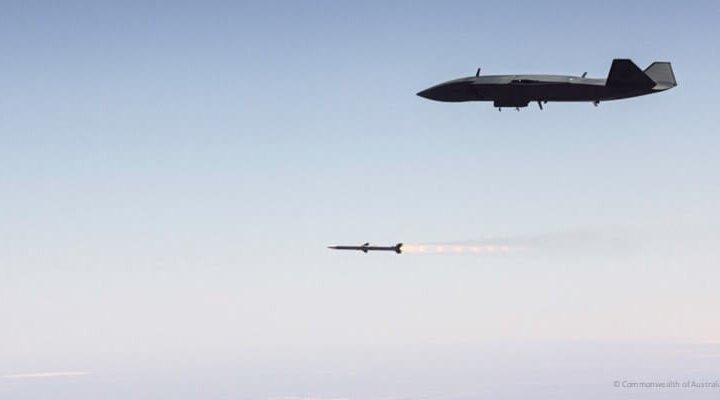
Solutions based on STOVL drones—short takeoff and vertical landing—are being considered capable of operating from the flight deck of Italian aircraft carriers.
Among the platforms considered are the General Atomics and Baykar systems, with particular focus given to the Bayraktar TB3, already successfully tested on the Turkish ship Anadolu, which sees the presence of the Joint Venture between Bayrak and Leonardo in Italy.
The goal is to have, by the next decade, unmanned assets capable of expanding the awareness and surveillance of the Carrier Strike Group, reducing dependency on ground-based platforms.
A European First
Upon completion of the F-35B program and full service entry of Trieste, Italy will be the only European Union country capable of fielding a fifth-generation Carrier Strike Group.
Within the NATO context, only the United States and the United Kingdom have equivalent capabilities.
The strategic goal is to consolidate an integrated and deployable Navy, capable of operating autonomously but entirely embedded within the allied apparatus, with a synergistic use of air-naval and amphibious components.