At the International Fighter Conference in Rome, the U.S. Navy presented a clear and consistent overall vision of how American embarked aviation is evolving in response to future challenges.
This is not just about introducing new platforms, but building an integrated operating ecosystem, where aircraft carriers, 5th generation fighters, and unmanned systems act as a single joint force, capable of ensuring deterrence, flexibility, and global presence.
The philosophy remains the same that has guided the U.S. Navy for over a century, that is, to maintain peace through strength. However, the form of that strength is transforming.
Today, the naval air projection is based on a balance between technological superiority, logistical sustainability, and adaptability, three factors that must coexist to ensure operational continuity in increasingly dynamic and contested scenarios.
The aircraft carriers as the architecture of deterrence

Aircraft carriers remain the symbol and tool of American power: platforms that combine capabilities, autonomy, and sustained fire, ensuring the potential to intervene in any theater of the globe. But their effectiveness depends not only on the amount of embarked aircraft but also on the quality of synergy between the various components.
The silent revolution

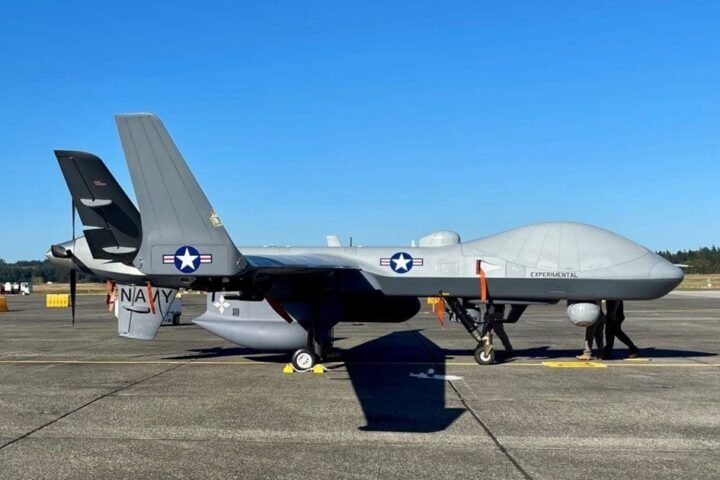
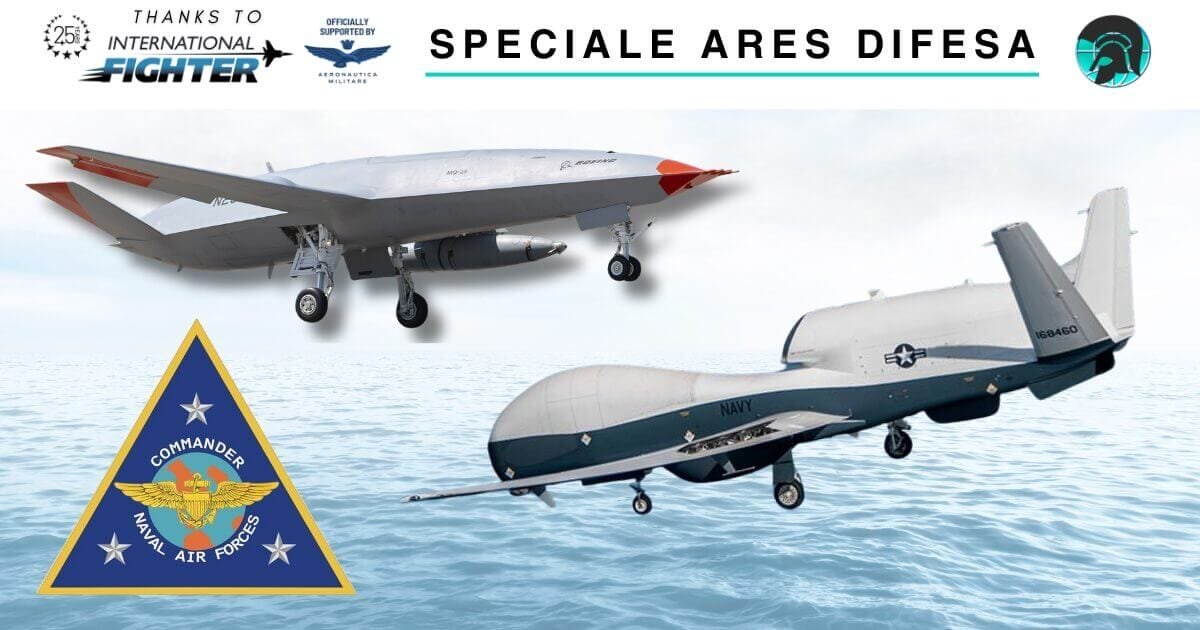
A growing part of the U.S. Navy strategy is dedicated to the integration of unmanned systems, a process that involves more than just technological experimentation but also deeply involves doctrine and organization.
Maintenance as a strategic weapon

The power of a fleet does not only reside in the number of resources, but in the ability to keep them ready and available. Behind every deterrence or surveillance mission hides a complex logistical chain, and the U.S. Navy is fully aware that maintenance is an integral part of military power.
Towards a connected future

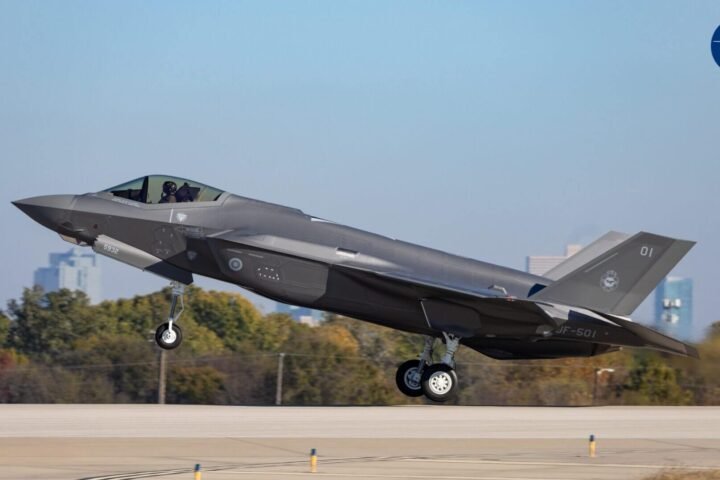
Looking to 2035, U.S. naval aviation envisions a future where over 700 F-35s will be operational in Europe alone, while reconnaissance, refueling, and combat drones will form a connective tissue between forces and Allies. In this framework, international collaboration is not an advantage but a necessity, because only through the sharing of procedures, data, and training will it be possible to support high-intensity multinational operations.