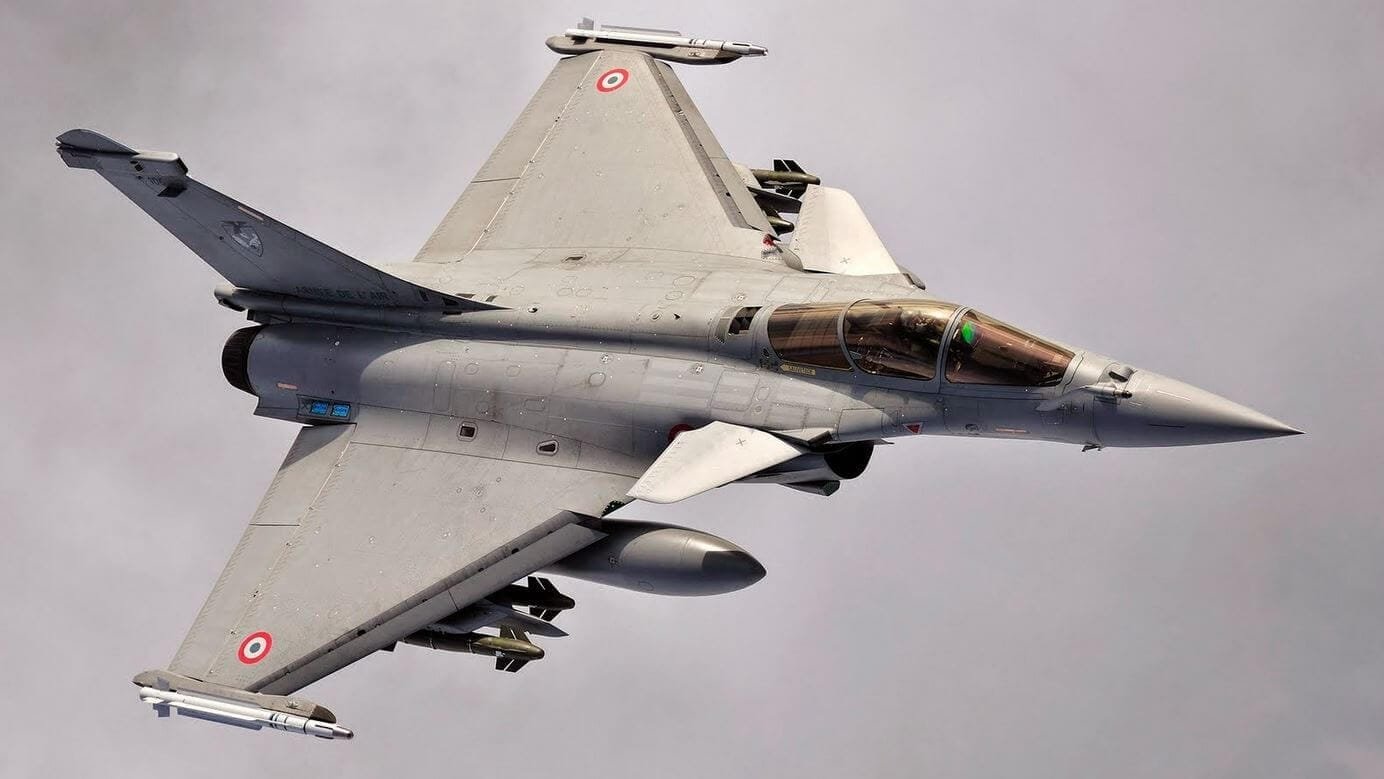
At the recent International Fighter Conference in Rome, the session on the future of French air capabilities outlined a clear vision: the next revolution in airpower will not only be driven by next generation aircraft, but by the ability to connect, integrate, and enable heterogeneous systems to cooperate in real-time.
The goal is to build, by 2040, a European _”system of systems”_ capable of ensuring information superiority, interoperability, and resilience in face of increasingly prolonged and complex conflicts.
The Perpetual Competition
The French perspective begins with a realization: the competition between major powers and regional actors is now constant, accompanied by a technological race that affects both physical and immaterial domains. Jamming capabilities, long-range missile threats, and the intensification of electronic warfare demonstrate that air superiority can no longer be taken for granted.
Maintaining freedom of action in the aerial domain remains an essential condition for any joint operation. To achieve this, it is necessary to win the information battle: control data, protect its integrity, process, and transmit it in minimal time to make decisions faster than the opponent. Decision-making priority thus becomes the new measure of operational superiority.
From Rafale F4 to Rafale F5

The French path to the future is not aimed at a sudden break, but a progressive evolution of existing capabilities. Today’s Rafale in the F4 version is the starting point, with communication systems more resistant to interference, updated sensors, and new generation air-to-air missiles.
The upcoming F5 version of the Dassault Aviation fighter-bomber will mark a more profound transformation: designed to execute complex missions in non-permissive environments, for suppression of enemy air defenses, and to ensure the continuity of French nuclear deterrence. But above all, the Rafale F5 will act as a test platform for the first “_combat cloud_” capabilities, introducing elements for collaboration and data sharing between multiple vectors and sensors.
The NGWS / FCAS Project
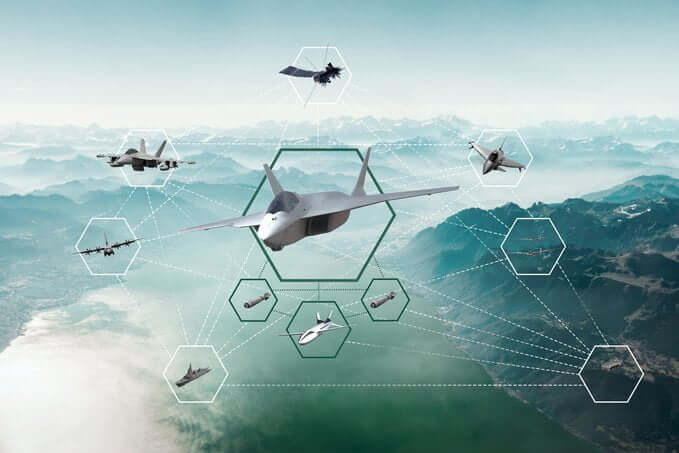
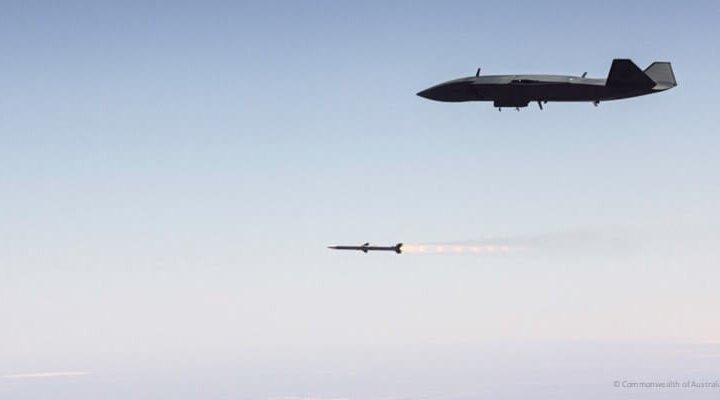
The vision materializes in the NGWS (Next Generation Weapon System) project, the heart of the broader FCAS/SCAF program developed by France, Germany, and Spain. It’s not about creating just a new fighter, but a coordinated set of components: a new generation aircraft with stealth features, a family of remote drones, some recoverable, others expendable, and a digital connection and command infrastructure, the _combat cloud_.
This ecosystem will allow merging of data from different platforms and orchestrating missions in a distributed and adaptable way. The innovation, therefore, is not only in vehicle technology, but also in the logic of combat, in which sensors, platforms, and command centers act as nodes in a dynamic network.
European Cooperation and Operational Challenges
According to information from the conference, the joint program between France, Germany, and Spain proceeds despite complexities related to industrial and technological sharing. Its multinational nature requires the adoption of common standards on system architectures, communication protocols, and interoperability standards – essential elements for effective collaboration in joint scenarios.
Alongside technological challenges are doctrinal and organizational ones: forming new competencies, reviewing the doctrine of use, adapting logistics and maintenance to highly digitized and interconnected systems. The transition to collaborative air warfare will require as much a cultural change as a technical one.
Preparing Today for Tomorrow’s Airpower
The revolution of air warfare will not happen suddenly, but must be prepared now, step by step, as competitors accelerate the production of advanced capabilities. Europe, and particularly France, aims for superiority built on secure data sharing, information resilience, and the ability to make collective decisions in real-time.
The future of air power will not be defined by a single aircraft, but by the network that links them. Superiority will no longer be measured only in terms of action radius or engine thrust, but in how quickly a complex system can gather, process, and transform information into action.