The Transformation of the Royal Malaysian Air Force and the South China Sea Challenge
In recent years, the Royal Malaysian Air Force (RMAF) has embarked on a long-term modernization process to ensure credible deterrence capabilities in an increasingly volatile environment.
The reference document, called **Capability Plan 2055 (CAP55)**, charts the course towards a more integrated, sustainable air force capable of operating in an environment marked by increasing competition in the South China Sea.
Malaysia’s geographical position, at the crossroads between the Indian and Pacific Oceans, places it in an enviable but also vulnerable strategic condition. The region is now the scene of a silent but constant confrontation, where cyber incursions, persistent maritime presence and intelligence activities create a “gray zone” where Chinese pressure is continuous.
The RMAF is called to respond to this evolution with intelligent modernization, able to balance limited resources and growing ambitions.
RMAF’s Evolution
The Malaysian Air Force was created with internal objectives: between the 1950s and 1970s, its mission was focused on **combatting internal insurgencies** and maintaining internal security, with predominant use of reconnaissance, transport and close support aircraft. With the Borneo crisis and the ‘Confrontation’ with Indonesia in the Sixties, attention shifted towards **national airspace defense.**

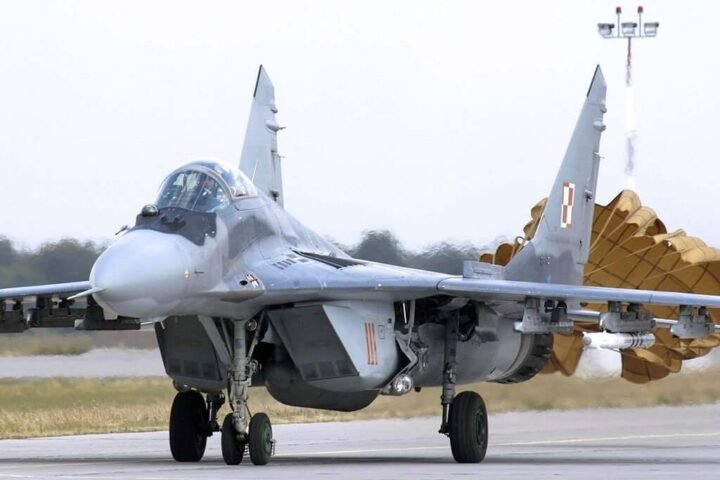
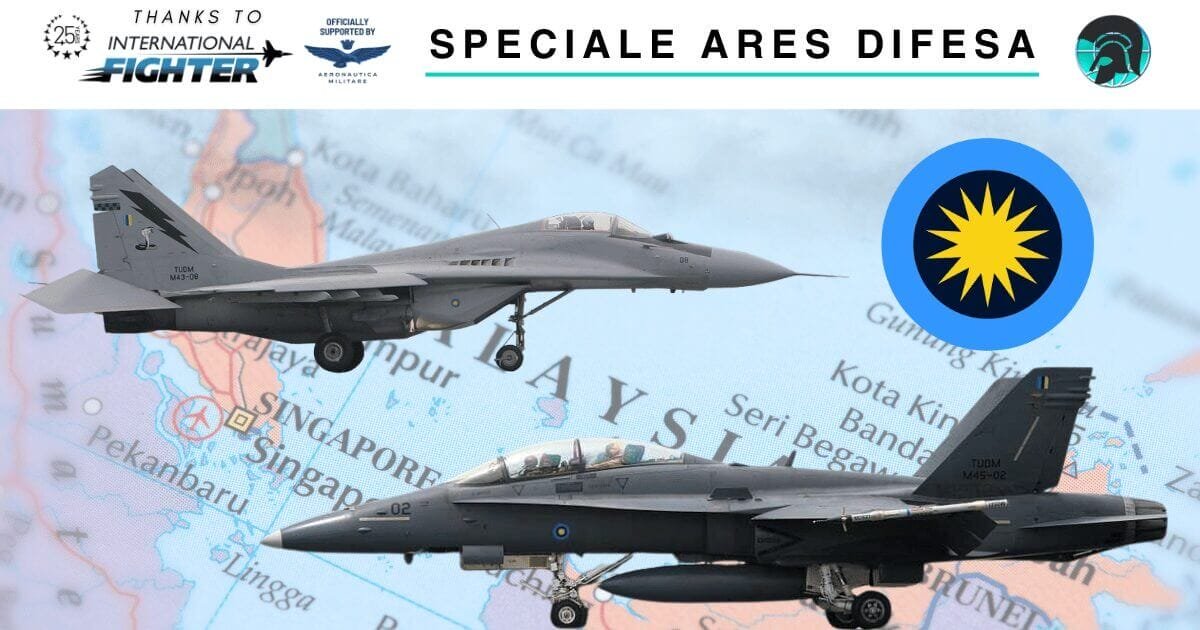
From the late 1980s, a serious modernization phase began, with the acquisition of F-5, MiG-29, F/A-18D and Su-30MKM fighters, marking the transition from a defensive force to a regional deterrent component.
Today, the RMAF operates in a multidomain environment**, where technology evolves rapidly and military decisions have to be made in increasingly compressed times. The introduction of artificial intelligence capabilities, electronic warfare, autonomous systems and hypersonic weapons is redefining the very nature of conflict.
In this scenario, Malaysia continues to maintain a non-alignment position, but intensifies its own international collaborations to strengthen training, interoperability, and response capabilities.

The Structure of CAP55 Plan
The CAP55 plan is divided into three progressive phases. The first, in progress, is dedicated to maintaining existing capabilities and preparing the foundations for the future. This includes the introduction of the new FA-50 training and light combat aircraft from South Korea, the acquisition of drones and ATR-72 maritime patrol aircraft, and the F/A-18D Hornet fighter upgrade program.
In the subsequent phases, foreseen until 2045, the entry of a new generation of multirole fighters is planned, as well as upgrading the Su-30MKM fleet, aiming for a fully integrated and digital system by 2055.
Fleet Heterogeneity
One of the major obstacles to RMAF’s progress is fleet fragmentation. The Malaysian Air Force employs systems of American, Russian, European, Turkish, and South Korean origin, with different doctrines and logistics chains.
This diversity, while offering strategic flexibility, generates operational complexity and high maintenance costs. The geographical distance between the Malay Peninsula and East Borneo amplifies the difficulties, making logistics a critical element for operational readiness.
The coexistence of the Su-30MKM and F/A-18D fighter jets emblematically represents this East-West dichotomy. The former guarantee autonomy and firepower, while the latter assure reliability, advanced avionics, and easier maintenance.

However, the lack of interoperability between Western and Russian data systems limits tactical integration opportunities, forcing the RMAF to develop homegrown solutions, which come with high costs and long-term obligations.
The Economic Factor
Economic difficulties remain a decisive factor. Malaysia allocates less than 1% of its GDP to defense, a share significantly lower than the regional average. This condition translates into maintenance cycle delays, spare parts shortages, and reduced availability of fully operational aircraft.
To address this issue, CAP55 foresees progressively rationalizing the vehicle fleet, reducing the number of different platforms and simplifying technical training and logistics. The anticipated 30% increase in the defense budget for 2026 represents a significant first step, but the journey towards a fully sustainable force will be lengthy.
RMAF’s Participation in International Exercises
Despite these limitations, the RMAF maintains an active role in the main regional and international training contexts. Joint exercises within the Five Power Defence Arrangements (FPDA) with the United Kingdom, Australia, New Zealand, and Singapore remain the foundation of Malaysian defense cooperation, while bilateral initiatives with India, the United States, and Australia contribute to consolidating operational capabilities and interoperability.
The experience gained in complex scenarios such as the Pitch Black exercises and the Pacific Airlift Rally humanitarian programs has reinforced the resilience of the airforce and the competence of their personnel.
The course outlined by the CAP55 plan is not only technological but also conceptual. The RMAF aims to build a coherent, adaptable, and interconnected system, capable of integrating traditional assets with digital and autonomous capabilities.