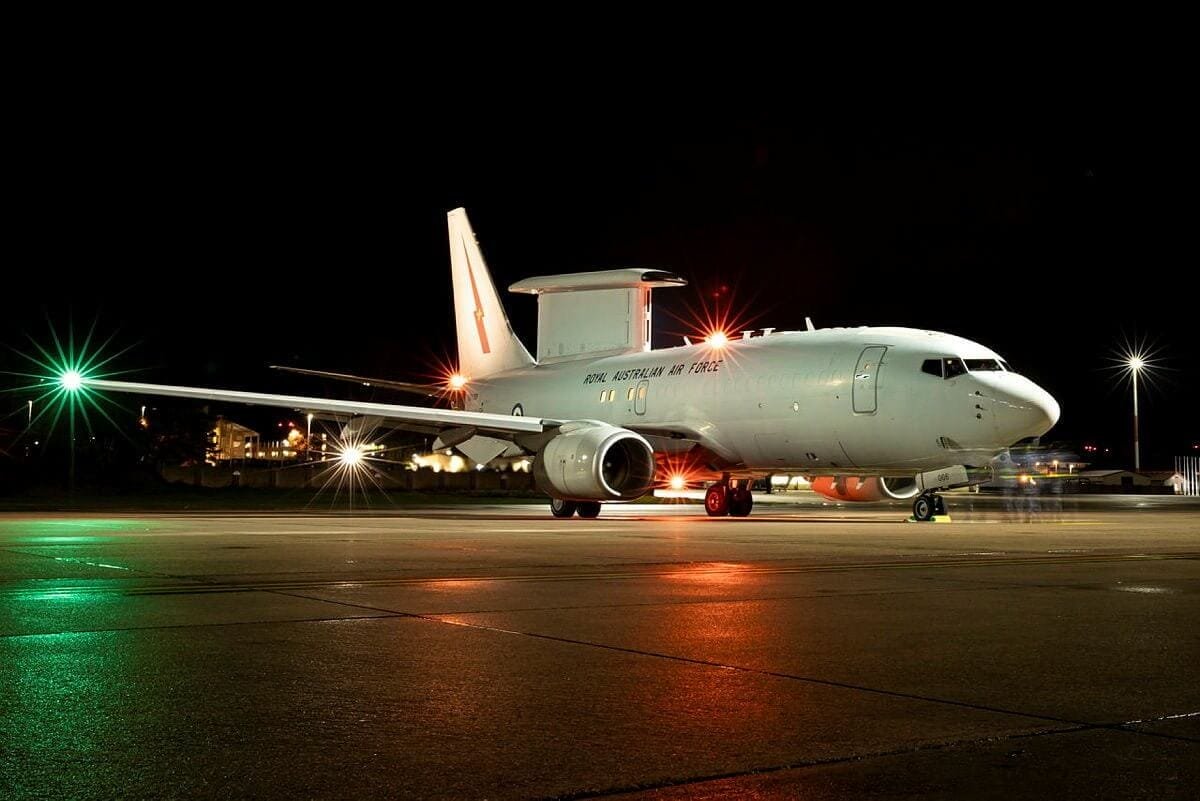
NATO has decided to abandon the acquisition process for six Boeing E-7A Wedgetail AEW&C.

The program to purchase an initial tranche of E-7A Wedgetail AEW&C was initiated by NATO to replace the fourteen remaining E-3A Sentry (out of eighteen total purchased), which have been in service since the early 1980s.
NATO had chosen the aircraft offered by Boeing, following the choices of the Royal Air Force (RAF) and the US Air Force (USAF), both interested in purchasing the E-7A to replace their own Sentry.
RAF Choices and the Collapse of the Rapid Prototype Program
However, the RAF initially required seven aircraft, but then reduced its request to five, before settling on three E-7As (with two other MESA radars set up and put in storage), while the USAF started the E-7 Rapid Prototype program aimed at creating a variant of the E-7 that met Air Force requirements.
Nevertheless, the E-7 Rapid Prototype program collapsed due to increasing costs and timelines. Furthermore, the new administration at the White House and the Pentagon have rather different views on this matter compared to the previous government.
The USAF itself no longer considers platforms such as the E-7 essential, preferring to focus on satellite constellations for surveillance and early warning, which will be complemented by smaller, cheaper aircraft compared to the Wedgetail (the AEW&C version of the Boeing 737 designed to meet the Royal Air Force’s requirement).
France Targets the GlobalEye
France, which faces the same issue as the UK, US, and NATO concerning the replacement of the E-3D AWACS, opted for Saab’s GlobalEye solution, ordering two aircraft with an option for a pair more.
In Europe, the GlobalEye, beyond the Swedish and French orders, has also caught the attention of Germany and Denmark. Interest in this aircraft has also been shown by Poland and Greece.
Now, with the abandonment of the E-7A Wedgetail’s purchase program, the chances of using the GlobalEye at the NATO level increase exponentially, especially considering the interest shown by Canada (which also participates significantly in the program supplying the Global 6500 aircraft).
Implications for NATO
The news about NATO giving up the E-7A acquisition was announced by the Netherlands Ministry of Defense, which emphasized that it was impossible to continue the program due to the US’s withdrawal.
Now, the Dutch Defense, along with the other six partners (excluding the United States, which, as described above, has other initiatives on hand) of the program for the new AWACS, has started evaluating alternatives to replace the E-3A fleet and is also looking for new partners.
The statement from the Netherlands Ministry of Defense concludes with a wish for the new surveillance and early warning aircraft to be in service by 2035. It also vaguely suggests investing as much as possible in the European industry, given the US withdrawal (an apparent reference to the GlobalEye).
Source: Netherlands Ministry of Defense
Photo credit @Department of Defense Australia/CPL Nicole Dorrett