The Royal Air Force is undergoing a **deep transformation phase**, driven by the need to have a force capable of flying, fighting, and winning continuously, 24 hours a day, in operational scenarios far removed from the linear scheme of the Cold War.
The war in Ukraine, the proliferation of anti-access/area denial systems, the systematic use of low-cost kamikaze drones, and the spread of long-range air-to-air missiles have made it clear that **air superiority can no longer rely solely on platform performance**, but must be based on an integrated ecosystem of capabilities.
At the **International Fighter Conference 2025**, the RAF presented a very clear vision: what counts is not only the “generation” of the aircraft, but the ability to combine sensors, weapons, software, manned and unmanned platforms, logistics, and information domain in a single coherent architecture. The traditional generational taxonomy is now at risk of becoming a conceptual cage: the operational reality is made of simultaneous missions, intertwined domains, and threats that blur the boundaries between offensive and defensive.
Platforms and capabilities

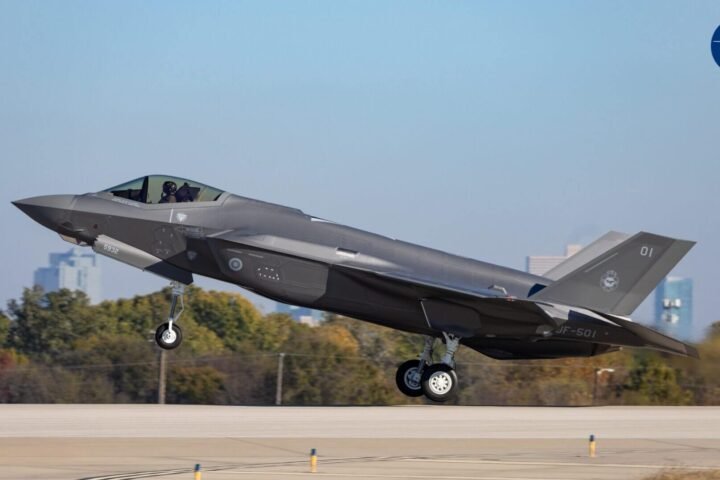
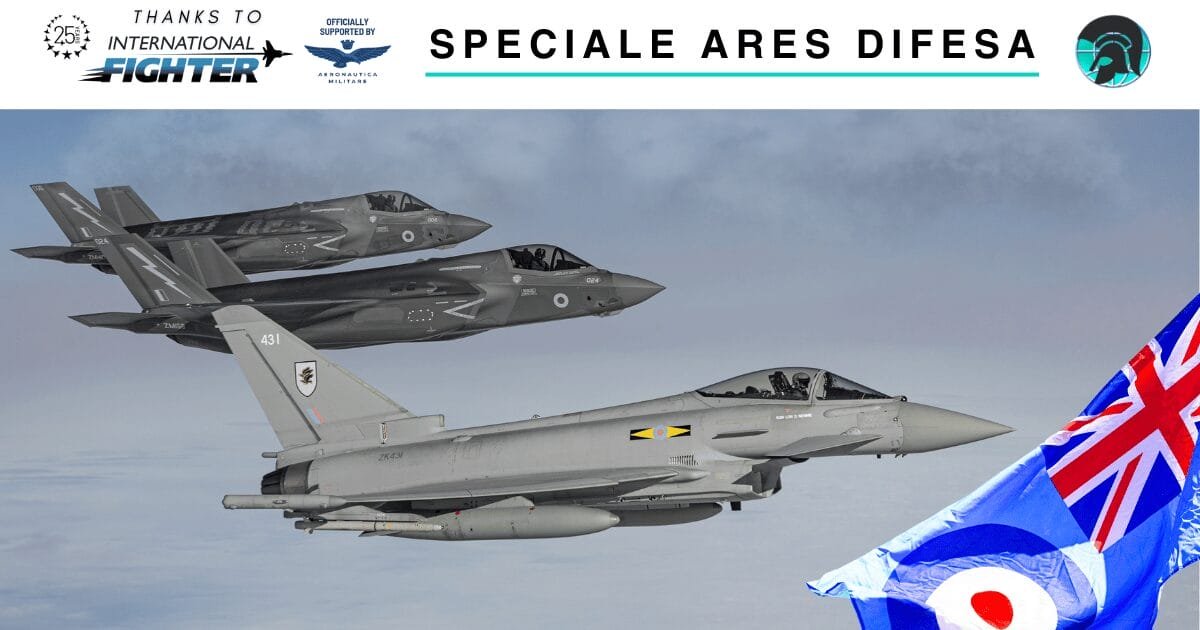
The British strategy for air combat is based on a calibrated mix of fourth and fifth generation platforms, augmented by a new family of **collaborative _unmanned_ systems and autonomous systems**. The F-35B represents today the fulcrum of the fifth generation, thanks to sensory fusion, **low radar signature** and the ability to perform in parallel **missions of air defense, attack, reconnaissance, and electronic warfare**. The Typhoon, for its part, continues to evolve with the introduction of advanced e-scan radar, full integration of the long-range **Meteor** missile and air-surface weapons such as **Brimstone**, maintaining a central role in interception and interdiction.

The real discontinuity is not just in individual platforms, but in combined use. The idea of transitioning linearly from one mission to another gives way to simultaneous management of effects: in the same flight profile, a department can contribute to air defense, precision strikes, ISR support and electronic warfare. The entry into service of systems such as the **MQ-9B protector** is not conceived as a simple replacement for Reaper, but as the start of a more agile model, based on **highly reprogrammable software**, faster update cycles, and an ever tighter integration with the rest of the combat force.
A national arsenal ready for conflict
The lessons of the conflict in Ukraine have imposed a harsh reflection: no air force, however advanced, can be credible if it is not supported by a ready, scalable and resilient national arsenal. The RAF therefore looks to the **entire spectrum from precision-guided munitions to industrial capability** to quickly regenerate stocks and complex systems, as well as the protection of critical infrastructures and logistics nodes.
Autonomy and collaborative drones

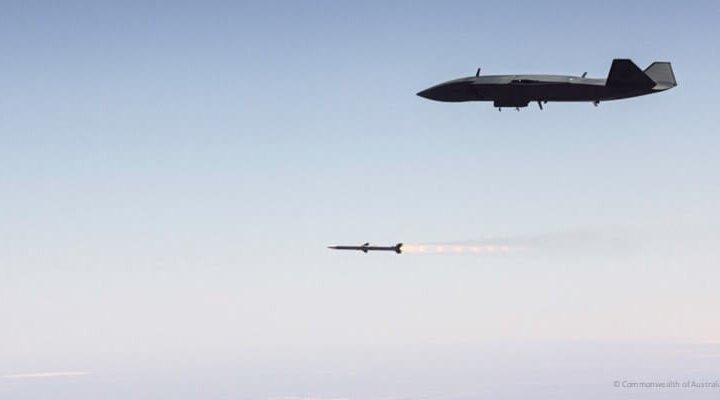
At the same time, the RAF is at the forefront of thinking about the role of drones and autonomous collaborative systems. The threat posed by hostile drones is now daily: in the Middle East, British fighters have already conducted repeated engagements against remote-piloted aircraft and _“one-way attack UAS”_, showing how tactically concrete and politically sensitive this threat is. But at the same time there is growing awareness that the same family of **unmanned systems should become a force multiplier for allied air power.**
The pilot of the future
The technological revolution inevitably requires a rethinking of the role of the fighter pilot. Whoever is now in line with the Typhoon or F-35 not only has to master a highly-performing airplane, but manage **a flow of information, sensors and decisions that define a completely new dimension of the trade.**
Interoperability as a decisive factor
One of the recognized strengths is **the level of interoperability reached by the NATO air forces**. In recent years, British Typhoons have operated side by side with German and Italian units, US and Italian F-35s, and assets of countries such as Finland, Canada, Japan, and Australia. Complex exercises and air policing missions show that the Alliance is capable of generating combined air power on scales difficult for potential adversaries to replicate.