Within the framework of the technological and operational transformations affecting the allied air forces, the issue of pilot training has emerged as an enabling factor.
The modernization of fleets, the massive introduction of fifth-generation aircraft, and the growing need for advanced capabilities make clear a fact that has remained implicit for years: Europe has never had enough flight hours to fully meet the needs of the Alliance.
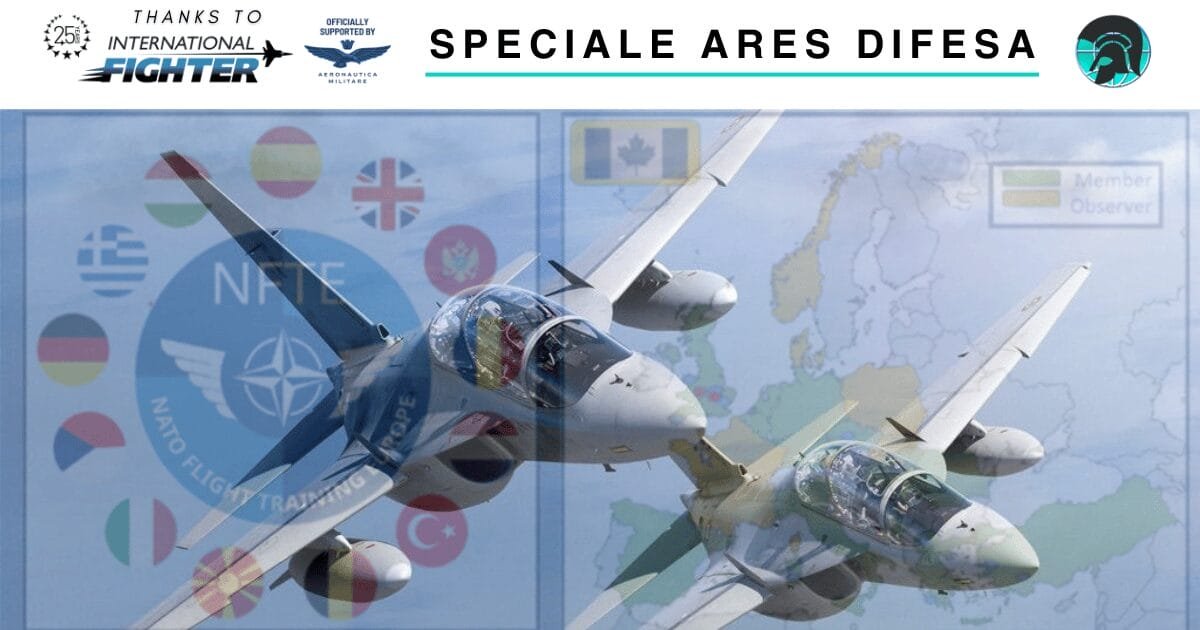
This realization gave rise to NATO Flight Training Europe (NFTE) – an initiative created nearly five years ago to build a harmonized, resilient network of training centers capable of combining national capabilities, skills, infrastructure and opportunities that until now, have been fragmented.
NFTE is not a flight school, and it doesn’t even own airplanes, simulators, or air bases. Instead, it is a multinational mechanism that coordinates, aligns, accredits, and makes existing capabilities in member states interoperable, providing a common framework for training hours supply and demand.
In moving from improvisation to a regulated system, the initiative intends to replace the traditional informal approach, based on bilateral agreements and personal contacts, with a stable framework that allows air forces to know, at any time, what capabilities are available, where they are located, and how they can be shared or enhanced.
The evolution of the network shows how much the concept has taken hold. It has grown from its original ten members to seventeen, with new joiners including non-European countries like Canada. The activities map, which only a year ago was almost empty, now represents an ever-increasing fabric of cooperation, personnel exchanges, joint programs, and rotations among bases using different platforms: from turboprops for the initial phase to advanced trainers such as M-346, Hawk, and T-38. Even MQ-9B training is already coordinated within the NFTE scope. This growth testifies to the desire of many airforces to overcome fragmentation and work within a common framework, particularly in light of the increasing training needs associated with fifth-generation aircraft.
The structure making all this possible is provided by the NSPA, NATO’s procurement and support agency. With a workforce of about two thousand people and a turnover exceeding ten billion euros, the NSPA provides the legal, administrative, and financial framework needed to transform national needs into common initiatives. The advantage is not merely procedural. The presence of a unique entity capable of purchasing services and infrastructure for multiple nations allows for economies of scale, reduces duplication, and enables investment redirection to where they are most useful, avoiding wastage or isolated initiatives difficult to sustain in the long term.
One of the most significant achievements so far is the development of a STANREC, a standardized recommendation that defines a common language and minimum criteria for various training phases. It does not establish mandatory flight hours or platforms, as these remain national prerogatives, but identifies competencies, skills, subjects, and tasks that must form the basis of training path recognized at the multinational level. This is a crucial step to ensure that a pilot trained in one nation can be immediately recognized by another, without the need for repetitions or duplications.
The underlying issue, however, is not solvable solely with technical rules. Many countries possess surplus capabilities but never had a frame to offer them to others; others suffer from a chronic shortage of flight hours; some others lack a clear vision of how their demand will evolve in the medium term. NFTE addresses this discontinuity by introducing a model resembling sharing platforms: if a nation has unused hours, it can transfer them to others; if no one has residual capacity, the system can guide investments to expand existing infrastructures or activate additional commercial contracts, for example, in the Red Air sector, electronic warfare, or Operational Readiness Training. The objective is to transform a constellation of isolated initiatives into a dynamic network using common data, analysis, and processes to guide coherent decisions.
The training structure remains divided into traditional phases, from elementary flying training to fighter lead-in and operational conversions. This results in a more flexible system, where each country maintains its own training identity but can easily integrate into a larger multinational circuit. In the future, these areas could be developed as common capabilities, allowing participating nations to benefit from high standards without having to bear the cost of highly specialized infrastructures alone.
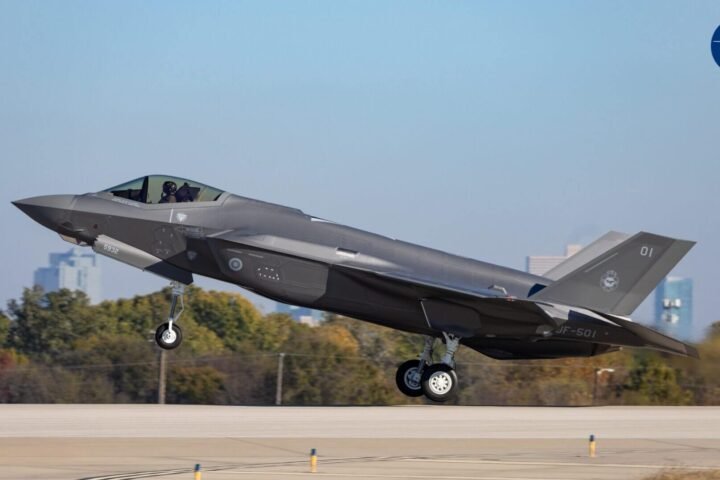
The most interesting point emerging from the debate is the cultural change required. Building a functioning network involves political commitment, clarity on objectives, and above all, awareness: no European air force can think of tackling the training needs of the coming decades alone. The upcoming addition of numerous F-35s, the evolution toward more complex combat concepts, the increasing importance of the synthetic dimension, and the need to maintain high readiness levels make closer cooperation inevitable.
NFTE does not erase or replace national responsibilities, which remain the basis of military training but creates a platform that allows collective consideration of capabilities, investments, and future development, providing NATO with a coherent framework within which to adapt its entire training cycle to future needs.