Collaboration Between Athens and Kiev in the Unmanned Surface Vessels Sector
As part of the agreements signed between Ukrainian President Volodymyr Zelensky and Greek Prime Minister Kyriakos Mitsotakis, a cornerstone is the collaboration between the two countries in the field of Unmanned Surface Vessels (USVs).

It is well known that Ukraine has developed a vast technological and operational background in the field of remote piloting systems, especially in the air and naval domains.
In this latter domain, Ukraine achieved unimaginable results until a few years ago, successfully blocking the operation of the Russian Black Sea Fleet by using attack USVs and anti-ship missiles, including domestically produced ‘Neptune’ missiles.
The USVs were repeatedly used successfully, catching Russian ships by surprise, in several cases sinking them and more or less damaging them heavily.
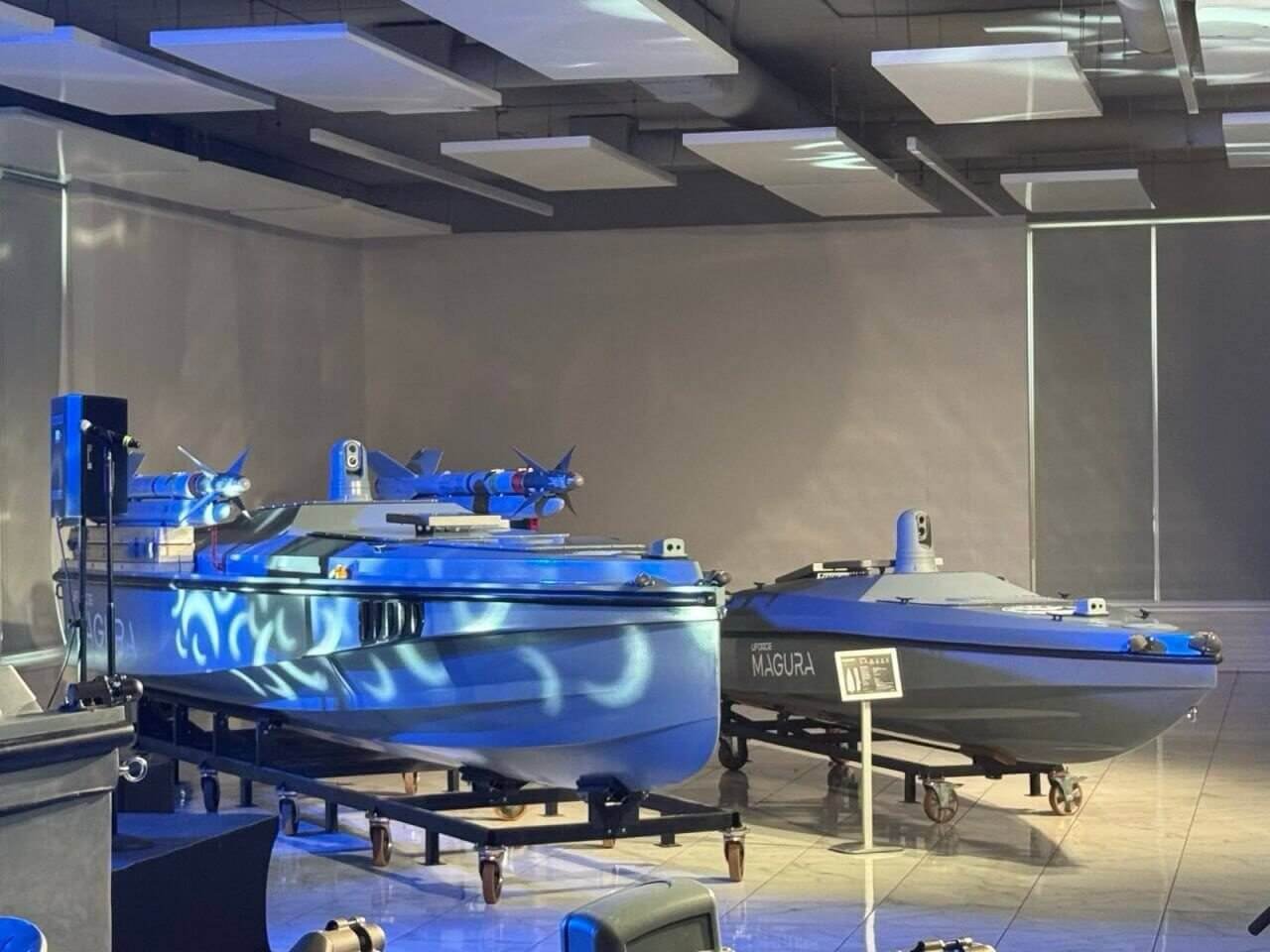
The Ukrainians showed great imagination, using these USVs to engage and shoot down helicopters and even Russian fighter-bombers with adapted air-to-air missiles, as well as loitering munitions and drones that extend the action radius, using rocket launchers for coastal bombardments, as well as accomplishing intelligence, surveillance, and reconnaissance (ISR) and mining tasks.
Furthermore, on more than one occasion, the Ukrainians launched USVs packed with high explosives against the pylons that support the Kerch bridge, a road and rail viaduct that connects Crimea to the Taman Peninsula, interrupting the transit of vehicles and trains.
For Athens, cooperation in this field with Kiev takes on a real strategic value as it allows them to make up for the ground lost to Turkey, which has already developed and produced various models of USVs. This increases the number of units (albeit remotely or autonomously controlled) available in the most sensitive and exposed sectors in the Eastern Aegean Sea, constituting a real force multiplier.
It is worth noting that Ukraine is a true driving force in the field of remote and autonomous piloting systems; technological and operational innovation is constant; with novel developments and operational tests being conducted successfully (most of the time) in less than a month to counteract what Russia has deployed, which is also highly active in the sector.
Moreover, for Greece, this collaboration opens the path of large-scale shipbuilding, not only for internal needs and for Ukraine, but also for the export market with products tested in the field or derived from them.
The idea is to refine Ukrainian technology in USV platforms equipped with sensors developed by the Greek industry; if the collaboration is successful, it is foreseen that it could also extend to the sector of Unmanned Underwater Vessels (UUVs).
Photo via social network X