In Germany, the Budget Committee of the Bundestag, the Federal Parliament, has approved the purchase of additional Joint Strike Missiles (JSM) manufactured by Kongsberg Defence & Aerospace.

Last June, the Bundestag had already authorized the purchase of JSMs in cooperation with Norway, with an allocation of over 560 million euros.
With the increase in the number of missiles purchased, the Bundeswehr is able to satisfy NATO requests for adequate ammunition storage capability levels.
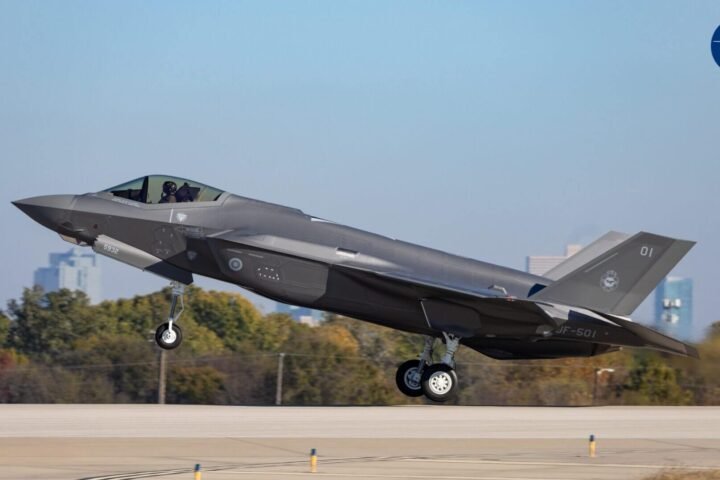
The JSMs will be used to arm the F-35A Lightning II fighter-bombers in service with the Luftwaffe, giving them suitable deep-strike capabilities.
The Development of the JSM
The JSM’s development was commissioned by the Norwegian Defence Materiel Agency (NDMA), which oversaw its integration with the Lockheed Martin F-35A Lightning II fighter-bomber, carrying out all the development phases in the United States, culminating in a series of test and qualification launches.
The missile has been adopted by Norway, Germany, Japan, Australia, and the United States, while the Netherlands have announced their intention to adopt the submarine-launchable version, the JSM-SL, to equip the new Orka class submarines with a long-range attack capability. The submarines, derived from Nval Group’s Scorpene, will be fitted out in four examples to replace the remaining Walrus-class submarines in service with the Koninklijke Marine.
Features of the Joint Strike Missile
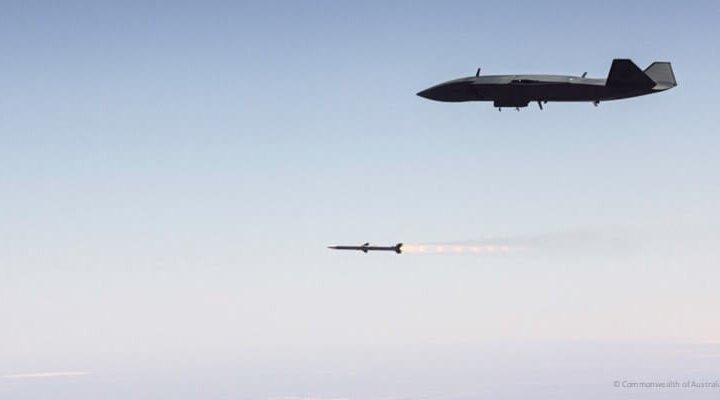
The Joint Strike Missile (JSM) was specifically designed for internal carriage on the F-35 and delivers a significant maritime and land long-range offensive capability.

The JSM is an air-launched strike missile and is designed for complex missions, such as Anti-Surface Warfare (ASuW) and land attack. The primary targets are typically highly defended and high-value mobile assets at sea, in coastal waters, or on land.
The Norwegian missile has a range of about 555 km with a HHL (High, High, Low) profile or 270 km with a HLL (High, Low, Low) profile, and its design makes it not only “invisible” to radar but also transportable in the internal bays (stations 4 and 8) of the Lightning II. There is clearly the possibility to mount it on wing pylons, giving up the stealth flight configuration of the F-35.
The JSM is equipped with an advanced mission planning system that takes advantage of maritime and land geography. JSM uses a highly accurate navigation system and adopts a low-altitude flight profile in the final attack phase. Automatic target recognition is supported by an advanced imaging infrared seeker.
The JSM weighs 416 kg, is 4 meters long, 0.52 meters high, 0.48 meters wide (stowed), and has a warhead of 125 kg of high explosive fragmentation.
Source: Federal Ministry of Defense of the Federal Republic of Germany
Photo credit: Norwegian Defence Materiel Agency (Forsvarsmateriell)