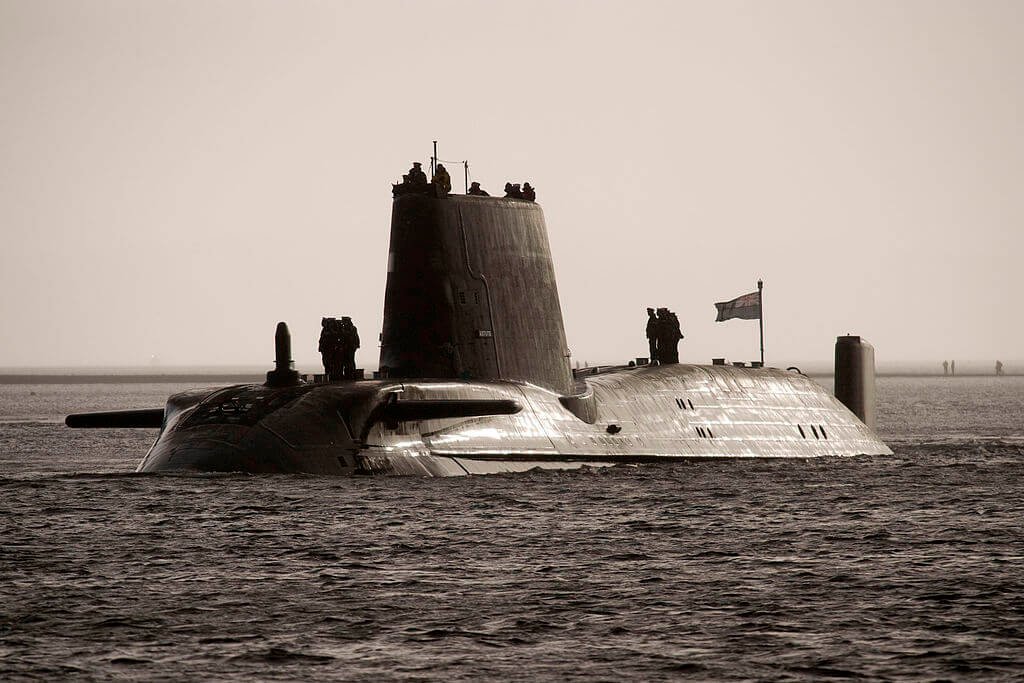
The UK officially unveils the ‘Atlantic Bastion’
The United Kingdom has officially launched the Atlantic Bastion, a new national program for underwater superiority designed to counter the rising underwater activity of Russia in the Northern Atlantic and to protect critical seafloor infrastructures.
The initiative was announced on December 8th by the British Ministry of Defence and represents one of the main operational pillars identified by the recent Strategic Defence Review.
Growing Russian underwater threat
The urgency of the program was underscored by recent incidents such as the presence of the Russian ship Yantar in the vicinity of British waters, accused by the MoD of hostile conduct towards the RAF, including the emission of lasers against P-8 Poseidon aircraft crews.
According to British intelligence, Moscow is enhancing its underwater capabilities not only from a military perspective, but also to interfere with infrastructures deemed vital for the country’s economic survival, such as undersea cables and energy ducts.
Remarks from the Defence Secretary
Defence Secretary John Healey took the opportunity to underscore that the underwater scenario has become a highly competitive domain requiring rapid innovation. “This new era of threats demands a defense capable of innovating at a wartime pace. Atlantic Bastion represents the future model of the Royal Navy”, he declared during a visit to the Portsmouth naval base, where experiments on the first systems are already underway.
Atlantic Bastion Features
Atlantic Bastion envisages the development of an integrated network of underwater sensors with autonomous platforms, artificial intelligence applied to enemy unit detection, and extensive digitalization of the entire operational ecosystem. The goal is to create a monitored and reactive environment that extends from the mid-Atlantic ridge to the Norwegian Sea, enabling the tracking of underwater movements and reacting in reduced times.
Initial Funding
According to the Ministry of Defence, a significant portion of the initial funding comes from a joint public-private package worth 14 million pounds. The level of industry interest has proven high, with numerous British and European companies involved in the development of sensors, autonomous platforms, and advanced software for analyzing and classifying contacts. The private component currently exceeds the government’s four to one, demonstrating a rare industrial push for an initial phase project.
First Sea Lord’s Statements
The First Sea Lord, General Sir Gwyn Jenkins, referred to the Atlantic Bastion as a strategic transition, highlighting how maritime security has become a key element of national policy again. “We cannot afford to stand still. The threats are evolving and we must evolve faster”, he stated, stressing that the underwater domain represents a vulnerability but also a potential competitive advantage today.
Future Plans
The first systems resulting from current testing will enter the sea next year. Later, the government plans to allocate additional funds for the development of an integrated fleet that combines traditional submarines, surface ships, and high-autonomy marine drones.
Conclusion
Atlantic Bastion is not just a technological project, but a structural response to a geopolitical context characterized by increasing Russian pressure on Northern Atlantic routes. The stated goal is to strengthen national resilience and maintain a tactical and strategic advantage in a traditionally invisible domain that is now crucial for UK security and economic stability.