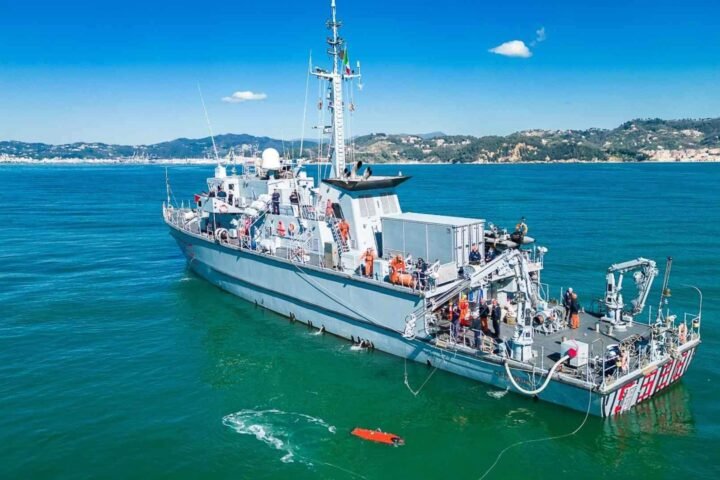
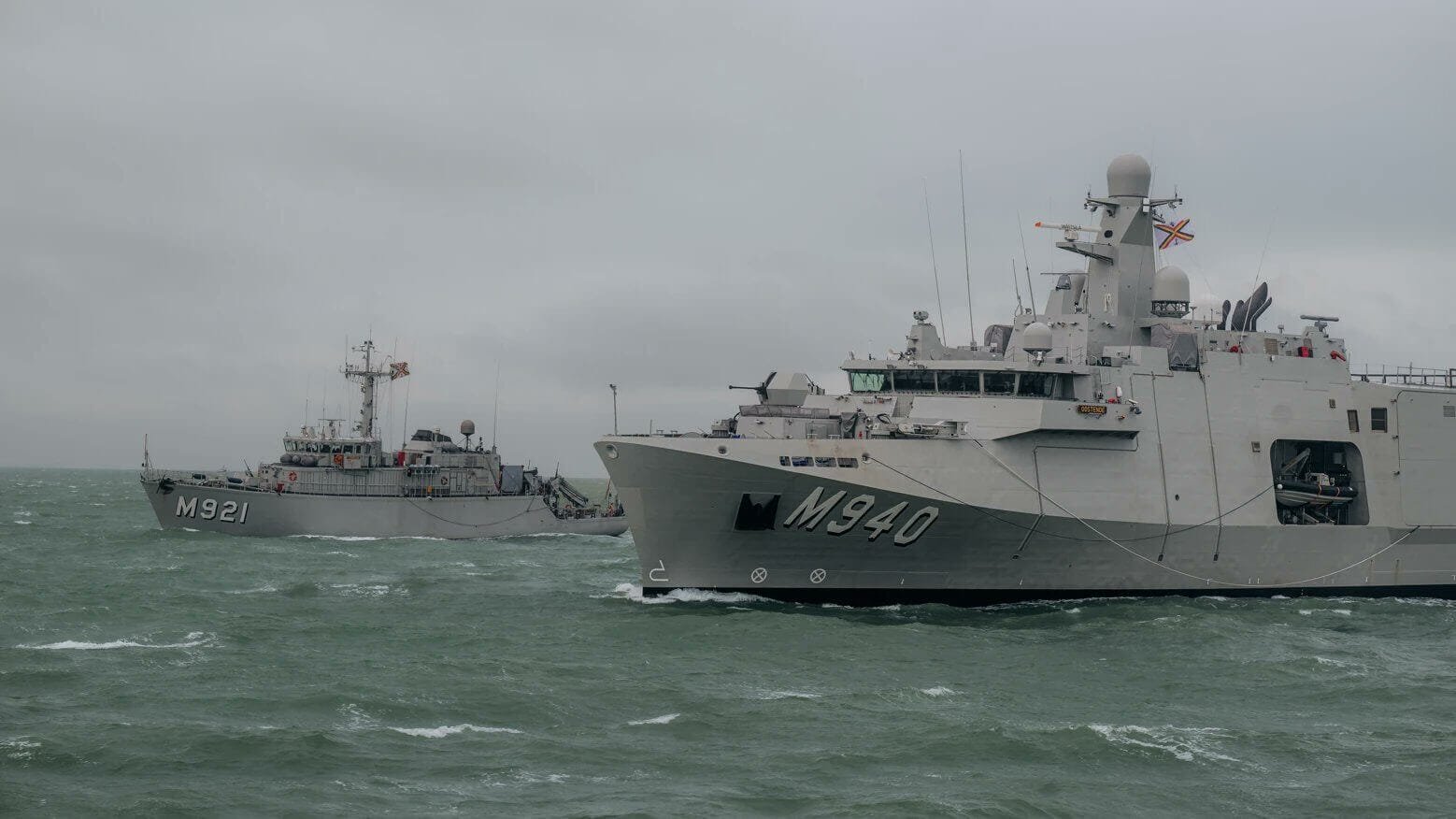
The Belgian Navy has received its first new generation minehunter ship M940 Oostende from the rMCM program in Zeebrugge, an initiative by Belgium and the Netherlands to replace the old Tripartite minehunters.

Assigned in 2019 to the Belgium Naval & Robotics consortium, formed by Naval Group and Exail, the rMCM program includes the participation of Kership, Piriou and other suppliers.
The Belgian-Dutch program plans to build a total of twelve units evenly split between the Royal Navy of the Netherlands and the Belgian Navy.
In addition to the twelve units, the Belgium Naval & Robotics consortium will also provide around a hundred drones integrated within the operating systems that will equip the ships.

The solution adopted by the Belgian and Dutch Navies represents a complete paradigm shift in anti-mine countermeasures, allowing the ship and its crew to keep safe from danger (stand-off). This solution increases the speed of mine clearance by ten times compared to conventional methods.
These ships, specialized in mine combat, will be the first to have the ability to transport, launch, pilot and reconfigure a set of surface drones (ships of about 12 meters and 19 tons in weight), underwater drones and aerial drones.

The new Belgian-Dutch units are the first to implement a fully robotic system for detection, classification, identification, and neutralization of mines.
The rMCM minehunters can withstand underwater explosions and have very low acoustic, electric and magnetic signatures, in line with the missions they perform.
Features of the new Oostende class minehunters
These countermeasure ships have the following characteristics:
- length: 82.6 meters;
- width: 17 meters;
- displacement: 2,800 tons;
- maximum speed: 15.3 knots;
- range: >3,500 nautical miles;
- crew: 63 people (base crew 33 people);
- Combat system: Naval Group’s Polaris system;
- Drone capacity: Exail UMISOFT system, 2 unmanned surface vehicles (Exail Inspector 125), 3 autonomous underwater vehicles (A-18 equipped with Exail UMISAS 120 sonar), 2 towed sonars (T-18 equipped with Exail UMISAS 240 sonar), 2 Mine Identification & Disposal Systems (MIDS) (Exail Seascan and K-Ster C), 2 unmanned aircraft (UMS Skeldar’s V200), 1 Exail influence mine sweeping system incorporating 5 CTM magnetic modules and 1 PATRIA acoustic module;
- embarkation capacity: 2 SOLAS 7-meter rigid hull inflatable boats;
- handling: 2 side launch and recovery systems for 19-ton surface drones or commando boats, a dedicated 15-ton rear crane and a 3-ton gantry crane.
The MCVs, both Belgian and Dutch, will join the NATO mine countermeasures fleet once operational.
Photo credit Belgian Defence