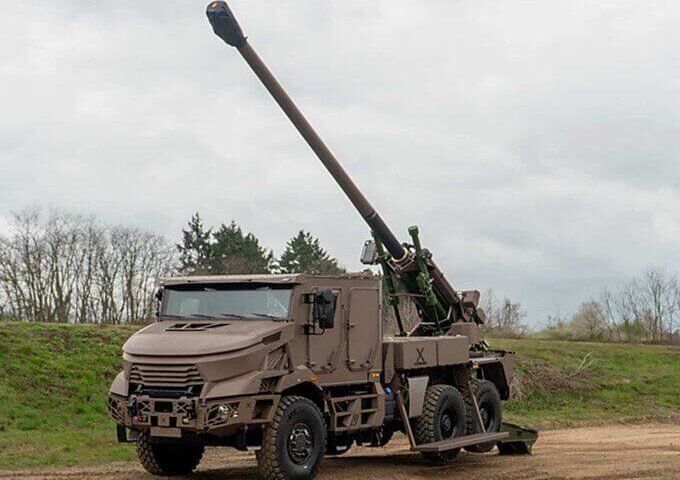
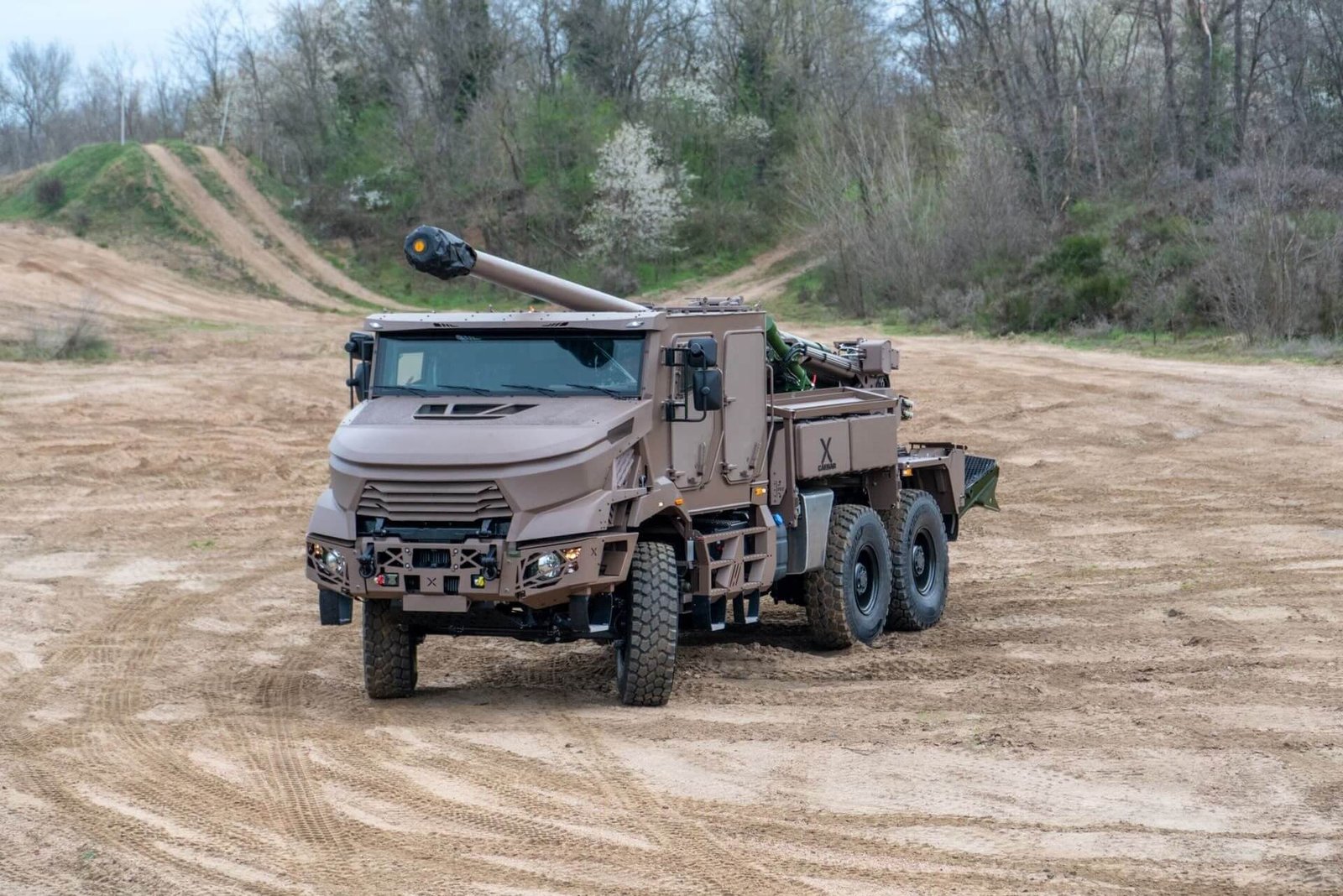
After months of uncertainty and institutional tension, the program concerning the 62 self-propelled CAESAR 8×8 artillery units intended for the Czech Army seems to have embarked on a positive phase.
In November, French government sources had reported difficulties related to the integration of the ADLER III CZ ASŘP fire control system with the ballistic computer of the new howitzers; difficulties so significant that former Defense Minister Jana Černochová had hinted at the cancellation of the entire contract.
Now, according to the Czech Technical Military Institute (VTÚ), the tests have concluded with a positive outcome, reopening the path to the completion of the program.
**Initial Criticisms**
The problem had emerged shortly after the delivery of the first two CAESAR units assembled with domestic components. Černochová had publicly reported problems with the system’s range and fire effectiveness, explaining that the test results had not been fully satisfactory and that the Army could not deviate from contractual specifications.
Complicating the situation further was the nature of the industrial project, which expects a local participation rate equal to 40% of the overall value. Final assembly is entrusted to Excalibur Army, while Tatra Trucks and Tatra Defense Vehicles provide chassis and cabins, with 155 mm ammunition certified at the national level.
Unlike the French Army’s CAESAR units equipped with the ATLAS system, howitzers destined for Prague must integrate ADLER III, a fire management software supplied by Germany’s ESG through RETIA for a cost of 28 million euros. It is precisely the interface with the ballistic computer that has caused interpretative friction between KNDS France and the Czech Ministry of Defense, particularly concerning the quantity and nature of data to be transmitted to the Czech technical institute VTÚ.
**Integrating ADLER III**
The VTÚ has announced the completion of the ADLER III connection tests, conducted from November 17th to 21st at the KNDS France site in Bourges. French engineers and representatives from the German supplier Hensoldt/ESG participated in the campaign. Over five days of trials, more than 70 tests were conducted, two thirds of which were considered fully successful, especially in the last cycles. The connection between ADLER III and the ballistic computer has been confirmed as well as the exchange of messages necessary for future firing missions. This is a key result, as the difficulties had emerged precisely during the simulated firing tests.
KNDS France had already expressed confidence in the possibility of overcoming the criticism, noting that both ADLER and ATLAS comply with NATO standards and have been successfully integrated into artillery platforms of various nations.
**Towards Operational Tests in 2026’s Second Quarter**
According to Marek Hajn, a functionary of VTÚ, the results obtained indicate an integration process now fully oriented towards final validation. The prediction is that the Czech CAESAR systems could enter the Army user testing phase in the second quarter of 2026, thus respecting the updated schedule.
If confirmed, the next stages will allow for regaining credibility for a strategic industrial program for Prague, strongly aimed at strengthening national capabilities in the field of long range artillery.