Not all is as it appears, especially when political and industrial balances are involved, capable of influencing the dynamics and balances of a continent – the Old Continent.

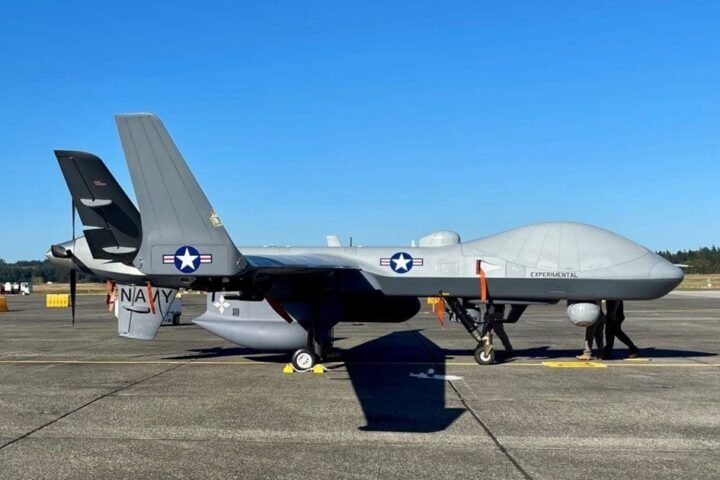
And the Franco-German FCAS/SCAF issue is certainly capable of doing so, with implications for the other European program, the Eurodrone, from which France “threatens” to withdraw.
For months now, a media war has been underway around the French-German program for a new 6th generation aircraft, particularly between the two major industrial groups involved, Dassault Aviation and Airbus Defence.
Wars made of news, articles, announcements, leaks and denials, with the Governments of Paris and Berlin trying to defuse controversies.
More or less incomprehensible statements issued by the two parties, often deliberately confusing, often amplified or buried according to their needs.
What is happening, then, between Dassault and Airbus?
What role do Paris and Berlin play?
The FCAS/SCAF program, born at the end of the last decade in response to American and Chinese sixth-generation fighter programs, sees France and Germany involved with their two key industrial players: Dassault Aviation (whose major shareholder is GIMD, holding the Dassault family) and Airbus (the European Aerospace giant, with stakes from both the French and German governments) with the Defence and Space division.
The role of Madrid
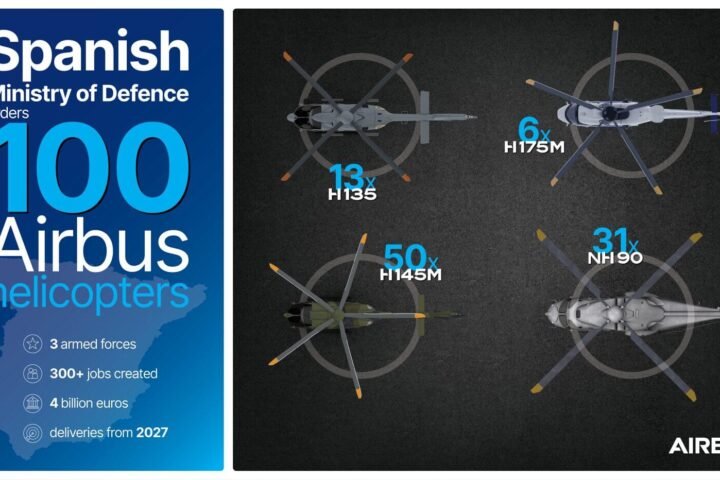
Considerably more modest, but not to be underestimated, is the Spanish role: Madrid is also a shareholder in Airbus, which has some of its most important European sites in the Iberian country having been awarded significant orders in recent years by the Spanish Government and participates with Indra and other companies in the program.
In recent months, to return to the first of the two questions we asked, we have seen a continuous media skirmish between the parties who blame each other for wanting to slow down or, worse, compromise the program.
Unfortunately, these squabbles have led to simplistic analyses and hasty positions.
Industrial leadership and project management had been clearly identified from the outset and leading role was given to Dassault, while Airbus would have had a secondary role in aircraft design and would have dealt with systematics and adjunct; the mirror situation would reflect in the Eurodrone program with inverted parts with Airbus as a leader and Dassault as a secondary role.
What happened and how this current crisis came to be is unclear, but it is apparent that the simplistic accusations against the French side are at least debatable, considering that all parties had accepted Dassault’s leading role which had been clarified and agreed upon right away.
The current situation, on the other hand, would seem to have been orchestrated by Airbus, evidently no longer willing to accept a secondary role in light of a size that is several orders of magnitude larger than Dassault’s.
The French Government’s Position
The same French Government, in fact, does not appear particularly thrilled by the continuous outbursts of Eric Trappier (CEO of Dassault) who attempts to defend the “pact” agreed by parties at the start of the program.
The growth of Airbus Defence and the defence of Dassault Aviation
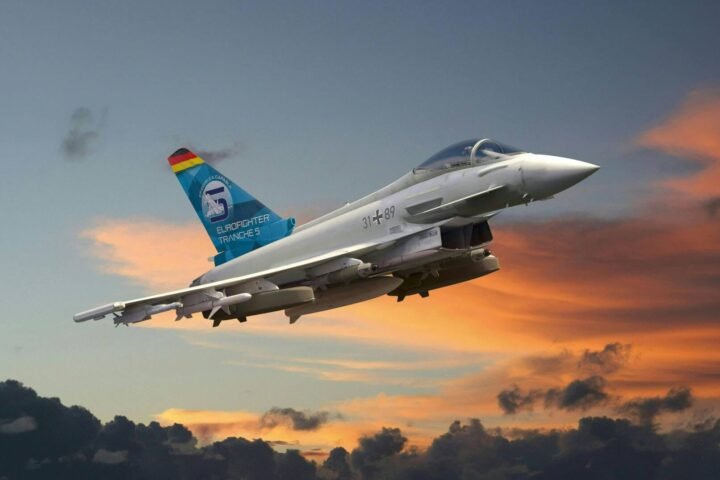
Paris cannot counter Airbus, and Dassault fears the loss of its leadership role in the program, a fact that would inevitably have devastating consequences on the future of the French company, which is already overshadowed today by the power of Airbus. Thanks to new orders from the German and Spanish Governments for the Eurofighter T4, T5, and EK, as well as the Italian and Turkish orders for which it will supply components, Airbus plays an increasingly crucial role in the Defence sector.
In addition, the entry of European Aerospace giant into the field of advanced training/light combat aircraft, thanks to the agreement with Turkish Aerospace Industries (TAI) for the Hurjet aircraft intended for the Ejército del Aire y del Espacio. These aircraft must be “customised,” thus, a full-scale strategy has been adopted by Airbus Defence, with the separation of the Space component that will be merged into a new aerospace company with Leonardo and Thales, a genuine colossus of the sector.
Furthermore, Dassault Aviation has accrued the green light from the French Government to commence studies of the F5 version of Rafale, which will represent the technological bridge connecting the current fighter with the FCAS/SCAF or with the potential national solution and continues to grind out orders for the F4.
German Government’s Position
The German Government’s position, on the other hand, is less clear.
It supports Airbus or, at best, does not go out of its way to defend Dassault, but appears chiefly interested in downsizing the French role in the program, backed by substantial financial availability and a defence budget worthy of a great power, not reluctant at all to place new orders for additional F-35A and P-8A Poseidon aircraft in the United States.
Airbus Looks Towards Saab
In this climate of uncertainty, Airbus is said to be ready to move forward alone in the FCAS/SCAF project but, at the same time, declares its willingness and ability to consider taking on new partners, probing the Swedish company Saab which, in turn, has begun definition studies of a new generation fighter aircraft/system of aircraft.
The match is yet to be played, but one thing is clear: it will be crucial not to let the self-promotion of the parties, who are mainly focused on public support, throw one off course…
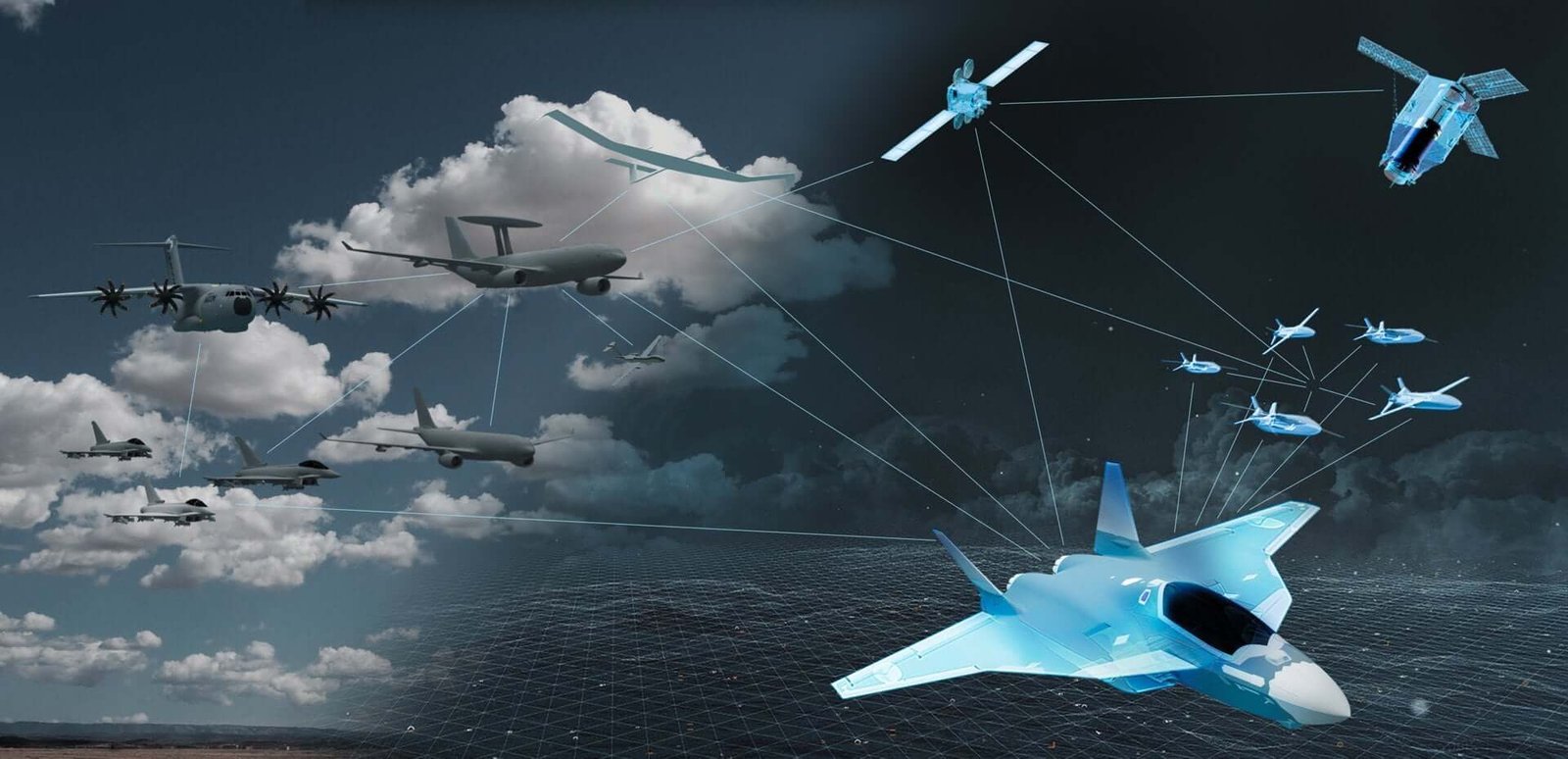
Image credit @Airbus Defence and Space