
Introduction
The Japanese Defense Ministry (MoD) has submitted an unprecedented budget request for fiscal 2026 (R8), amounting to 8.845 trillion yen (approximately 55 billion euros), confirming Tokyo’s commitment to a _”fundamental fortification”_ of its defense capabilities in response to an increasingly complex regional security environment.
The budget request, which marks a 4.4% increase from the previous year, is fully aligned with the _”Defense Buildup Plan”_ adopted in December 2022. The document highlights the progress made in implementing the plan and outlines spending priorities to boost capabilities in seven key areas.
Strategic Priorities
Japan’s spending is focused on enhancing what the Defense Ministry defines as the seven priority capability areas.
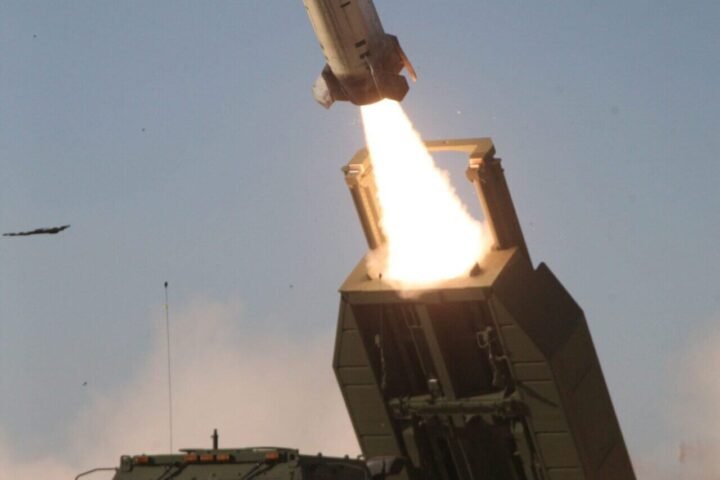
Firstly, stand-off defense capabilities, with 1.246 trillion yen, continue the development and **massive acquisition of long-range missiles to target enemy forces at a distance.** The budget funds the deployment of the improved Version 12 SSM missiles in land, sea, and air variants, the continued development of **hypersonic and high-speed gliding missiles** for island defense, and the integration of **Tomahawk missiles** purchased from the United States onto naval vessels.
Air and missile integrated defense capabilities, amounting 5.174 trillion yen, include funds for **new ships equipped with the Aegis system,** upgrades to the Patriot systems, acquisition of **SM-3 Block IIA and SM-6 interceptor missiles,** and an upgrade to the radar and command network, including the next-generation **JADGE** system.
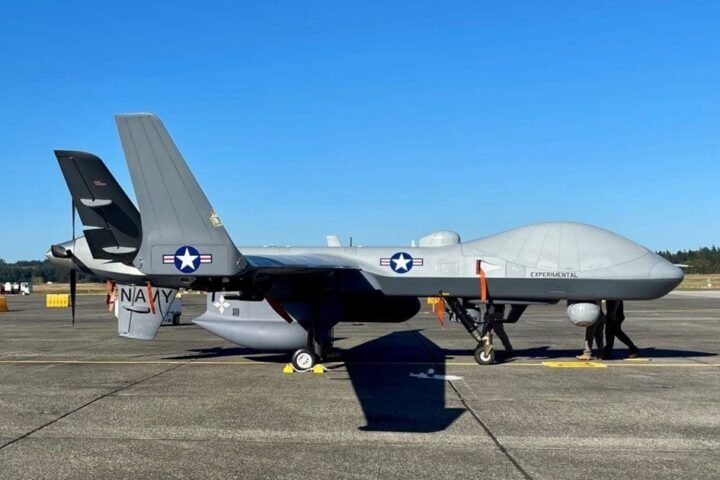
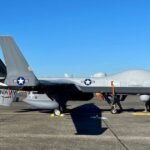
One of the most innovative pillars of the budget is unmanned asset defense capabilities, amounting to 3.128 trillion yen. Exactly 128.7 billion yen is allocated specifically to build the **SHIELD** system, a multi-level coastal defense system based on the extensive use of various types of drones, for reconnaissance and attack. **MQ-9B SeaGuardian drones** are also to be purchased.
Cross-domain operations capabilities including space, cyber, and electromagnetic operations are receiving substantial funding. For space, 1.385 trillion yen funds the **next-generation defense communications satellites,** enhancement of Space Domain Awareness capabilities, and the reorganization of the Air Force into the Self-Defense Air and Space Force. For cyber, 2.468 trillion yen is allocated to strengthen cyber defense, implement a risk management framework, enhance the **Ministry’s Cloud,** and train specialized personnel, with the aim of reaching **4,000 cyber specialists by 2027**. For electromagnetic warfare, purchases of electronic warfare systems such as the **Type 24 Electronic Warfare System** and development of technologies such as **hi-tech lasers** are expected.
Command, control, and intelligence **capabilities, worth 3.875 trillion yen,** are aimed at enhancing information systems, collection and analysis capabilities, including the application of AI for the analysis of open-source information and social media, and the newly established **Joint Operations Command** in March 2025.
Quick deployment and civil protection capabilities, worth 1.974 trillion yen, support the purchase of **KC-46A aircraft and UH-2 helicopters,** as well as the use of civilian vessels through PFI schemes for **logistical support to remote southwest islands.**
Unprecedented emphasis is placed on resilience and sustainability, with substantial funds for ammunition stocks, 2.583 trillion yen, **equipment maintenance,** 17.492 trillion yen, and **infrastructure protection,** 10.636 trillion yen, to ensure operational continuity in the event of prolonged conflict.
A significant part of the budget is allocated for improving personnel conditions – crucial in a context of recruitment difficulty. 765.8 billion yen is planned for **improving wages and allowances for personnel** in particular conditions such as naval crews or remote locations, improving accommodations, nurseries and work environments with specific attention to female personnel, and supporting veterans transition post-career.
To support the domestic defense industry, 723 billion yen are allocated for initiatives such as the **Defense Equipment Transfer Fund,** with 400 billion to support **defense exports,** and investments to strengthen supply chain resilience.
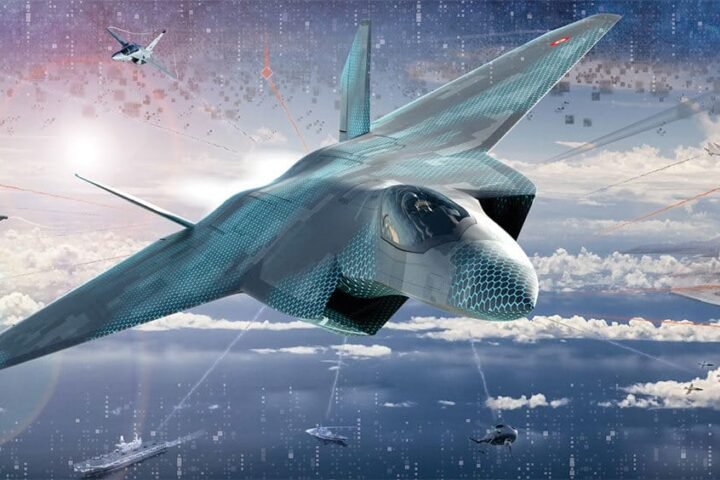
The budget confirms substantial investments in futuristic projects such as the development of the **next-generation fighter jet in collaboration with the United Kingdom and Italy,** with 206.6 billion yen, the development of the **Glide Phase Interceptor with the United States** to combat hyper-speed threats, with 55.6 billion yen, and research in cutting-edge technologies such as **Artificial Intelligence** for the command of drone swarms, high-power lasers, and innovative weapon systems.
The budget request reflects Japan’s determination to speed up the transformation of its self-defense forces in response to China’s rising military power, the ongoing North Korean threat, and global instability. The emphasis on long-range missiles, resilience, disruptive technologies like drones and cyber warfare, indicates a clear strategy towards deterrence and integrated defense across all operational domains. The Japanese Parliament is expected to give final approval to the budget in the coming months, with wide political convergence anticipated on these strategic priorities.