
Good afternoon everyone and thank you for joining us for the update on Leonardo’s Industrial Plan. I’m Valeria Ricciotti, Head of Investor Relations and Credit Rating Agencies. Today, our CEO, Roberto Cingolani, will update you on the key initiatives and progress in strengthening our core business areas, as well as the new initiatives paving the way for the future. The presentation is planned to last approximately one hour, after which our CEO, together with our CFO, Alessandra Genco, will welcome your questions. Please note that we will take questions from both the conference call and the web. The supporting slide presentation is available for download by registering for the webcast, and all the industrial plan update materials are available on our website under the Investor Relations section. Please note that throughout the presentation, we will be making forward-looking statements, so I invite you to refer to our safe harbor statement.
Now, I will hand you over to our CEO, Roberto Cingolani.
Thank you, Valeria. Hello everyone, and welcome to the update of the Industrial Plan.
One year after presenting the plan, there is much to discuss. We have seen positive developments in the business, along with significant changes in the geopolitical landscape. Today, I will outline what the future of Leonardo will look like over the next five years.
Recap of 2024 and the Industrial Plan
Our 2024 financial KPIs are as follows:
- Orders increased by 12%, from €18.7 billion to €20.9 billion.
- Revenues grew by 11%, from €16 billion to €17.8 billion.
- EBITDA rose from €1.35 billion to €1.52 billion, reflecting a 13% increase.
- Return on Sales increased from 8.5% to 8.6%.
- Free Operating Cash Flow grew from €0.65 billion to €0.83 billion, a remarkable 27% increase.
The Industrial Plan Vision
Our vision is clear: to develop multi-domain interoperability by integrating our legacy platforms (aircraft, helicopters, electronics, and maritime technologies) with new technologies in cybersecurity, space, high-performance computing, and cloud computing.
This strategy is based on two key objectives:
- Bridging the transition from defense to global security.
- Positioning Leonardo as a catalyst in the new European defense space.
Strengthening the Core Business
We are ensuring that our traditional products—aircraft, naval and land technologies, and electronics—remain competitive and continue to evolve. This involves:
- Portfolio rationalization to focus on high-value areas.
- Boosting efficiency across the company.
- Enhancing digitalization across all business units.
At the same time, we are embracing new challenges in global security, which involves:
- Inorganic growth through acquisitions and alliances.
- Investments in emerging markets.
- Technology expansion in cybersecurity, AI, and space.
Implementation of the Plan
We have separated organic growth initiatives, such as R&D, innovation, new product introduction, digitalization, and service expansion, from inorganic growth strategies, such as global alliances and acquisitions.
Significant progress has been made in digitalization:
- AI and advanced simulation are being implemented across all platforms.
- Integrated business solutions have been developed for enterprise-wide digital transformation.
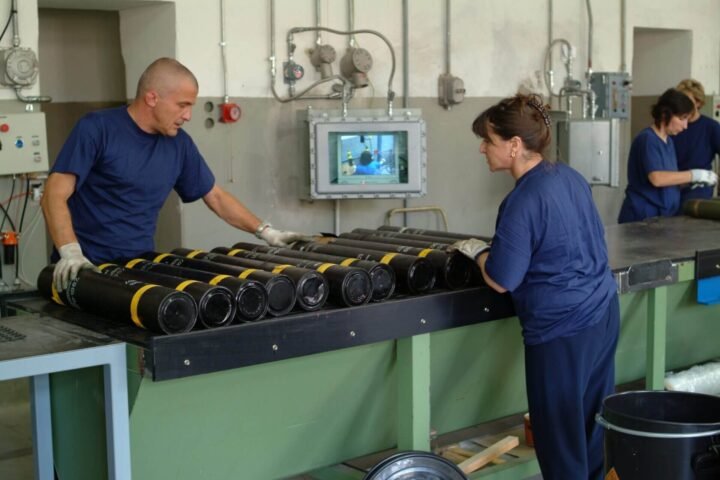
- Smart manufacturing is improving efficiency and flexibility in production.
- Digital simulation is now a key tool for aircraft and helicopter production.
- AI-driven defense operations are enhancing command and control interoperability.
- New digital services are expanding Leonardo’s portfolio beyond hardware.
Efficiency Plan
We implemented a cost-saving plan targeting €1.8 billion in savings over five years. In the first year, we exceeded expectations, achieving €191 million in savings:
- €125 million from procurement efficiencies.
- €15 million from corporate expenditure reductions.
- €23 million from travel cost reductions.
- €28 million from divestments of non-core businesses.
Our cost-saving measures also mitigated inflationary pressures, reducing the expected impact from 5.4% to an effective 2.9%.
Inorganic Growth
We have initiated several major strategic initiatives:
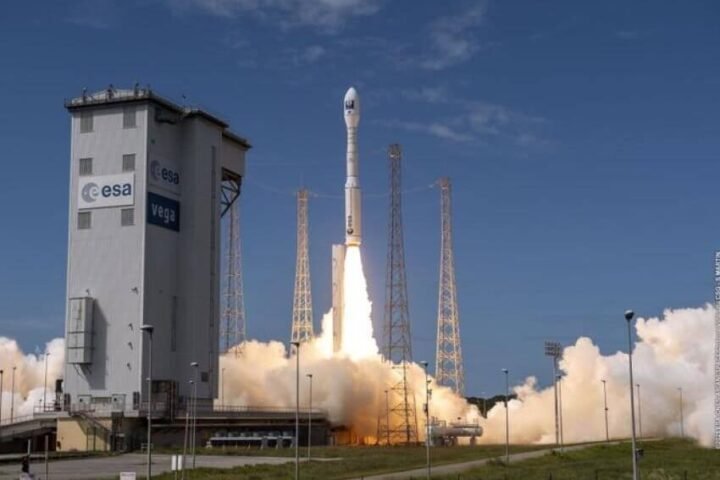
- New Space Division and launch of a Low Earth Orbit (LEO) satellite constellation.
- Joint venture with Baykar for unmanned aerial systems.
- Joint venture with Rheinmetall for advanced military vehicles.
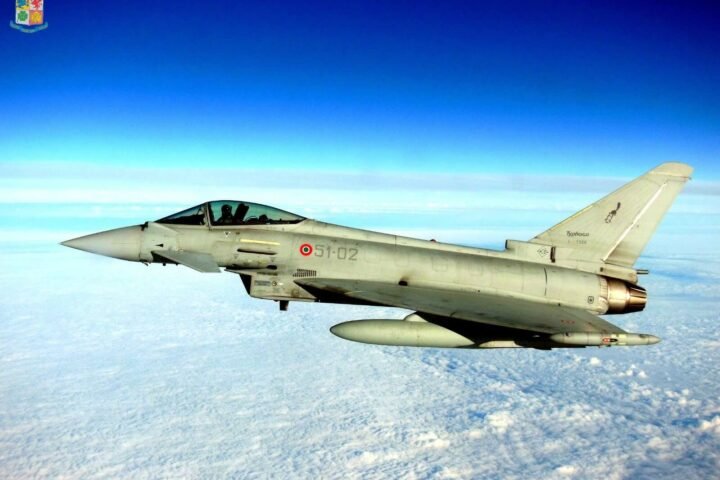
- GCAP joint venture for the sixth-generation fighter jet.
- Leonardo Hypercomputing Continuum, a new high-performance computing and AI initiative.
2029 Financial Targets
By the end of the plan, we expect:
- Orders of €26.2 billion (+17% vs. 2024).
- Revenues of €24 billion (+27%).
- EBITDA of €2.8 billion (+73%).
- ROS of 11.8%.
- Free Operating Cash Flow of €1.53 billion (+73%).
These projections do not include potential increases in European defense spending.
Conclusion
Leonardo is reinforcing its core business while expanding into global security. By integrating advanced technologies through a multi-domain approach, we are positioning ourselves as a key player in the future of defense and security. Thank you for your attention. We are now ready to take your questions.
Analysis
Named Entities
- Organizations: “Leonardo,” “Baykar,” “Rheinmetall,” and “GCAP” (joint ventures).
- People: “Roberto Cingolani” (CEO), “Alessandra Genco” (CFO), “Valeria Ricciotti” (Investor Relations).
- Financial Figures: Several billion-euro figures are referenced, emphasizing business growth.
- Geopolitical Context: Mentions of European defense spending and global security trends.
Sentiment and Tone
- Optimistic & Strategic: The text uses positive wording to highlight growth and success.
- Persuasive & Forward-Looking: Frequent use of future-oriented language (e.g., “paving the way,” “positioning Leonardo”).
- Data-Driven & Formal: The use of numerical evidence and structured sections reinforces credibility.
Linguistic Features
- Technical Terminology: Words like “high-performance computing,” “digital backbone,” and “multi-domain” indicate specialized industry knowledge.
- Corporate Jargon: Phrases such as “efficiency boost,” “portfolio rationalization,” and “synergy” reflect corporate strategy language.
Fulle Text – Non edited
Good afternoon everyone and thank you for joining us for the update of Leonardo’s Industrial Plan. I’m Valeria Ricciotti, Head of Invest Relations and Credit Trading Agencies. Today our CEO, Roberto Cingolani, will update you on the key initiatives and progress for strengthening our core business areas, plus the new initiatives that are paving the way to the future. paving the way to the future. The presentation is planned to last approximately one hour, then our CEO together with our CFO Alessandra Genco will welcome your questions. Please note that we’ll take questions from both the conference call as well as from the web. The supporting slide presentation is available for download by registering to the webcast and all the industrial plan update materials are available on our website under the investor relations section. Please note that throughout the presentation we will be making forward looking statements so I invite you to refer out to our safe harbor statement. Now I will hand you over to our CEO Roberto Cingolani. Thank you Valeria. Hello everybody and welcome to the update of the industrial plan. It’s one year after the presentation of the plan there’s a lot new. We had good news with the business and also a big change in the geopolitical scenario. So today I will try to tell you what’s going to be the future of Leonardo over the next five years. First of all let me recap the data of 2024 and the original idea underlying the industrial plan. Our 2024 financial KPIs are shown here. The orders have been increasing by 12 percent from 18.7 billions to 20.9 billions. Revenues been increasing by 11 percent from 16 to 17.8 billions. EBITDA has been growing from 1.35 billions to 1.52 billions with a growth of 13 percent. Return of sales been increasing from 8.5 percent to 8.6 percent and the free operating cash flow has been growing from 0.65 billions to 0.83 billions with a remarkable growth of 27 percent. Recap of the industrial plan. I mean the vision you remember is very simple. We’re going to develop a multi-domain interoperability that essentially puts together our legacy platforms, aircraft, helicopters, electronics, maritime technologies with new technologies in the area of cyber security, space, high-performance computing, cloud computing. There is a two-fold strategy under the plan. The first one is bridging the transition from defense to global security that you see here and the second one Leonardo wants to act as a catalyst for the new European defense space. Now the two pillars of this vision are strengthening the core business. We have to make sure that our traditional products are aircraft, naval technologies and land technologies, electronics continue to be competitive and are continuously improved. In the meantime this means rationalization of our product portfolio, boosting our efficiency plan throughout the company and the corporate and increasing the capability in digitalization across all our businesses. The second pillar of the strategy is paved the way to the broader challenge of security, global security. This means inorganic growth, new technologies in emerging markets, creation of global alliances, and particularly cybersecurity, artificial intelligence, space technology integration in our platform. So overall this is the picture that you remember from last year and let’s see how we go for the implementation of the vision. I’m sure you remember we were separating the organic growth, so R&D, innovation, and new product introduction, digitalization, and servitization, so increasing the capability to have digital services associated to our platforms. Efficiency boost was based on group-wide efficiency and corporate cost reduction, business and product focus rationalization, that was very important. You remember we quit some off-core business last year, and optimization of operations. Now this list that you see here is a list of accomplishments in green and ongoing activities that I don’t have the time to comment, but you find those things in your slides, so I’m sure you can you can see them later. The last important point for the implementation of the plan is the inorganic growth term. This means for us primarily creating global alliances and accelerating merchant acquisition in emerging technologies and emerging markets. You’ve seen the new space division establishment. I will introduce you for the for the next years. The new joint venture with Baikar on unmanned systems. The Leonardo Raymetal military vehicle joint venture, which has been established. The signed agreement for the JV on the G Cap. And there are a number of other activities that I will describe you later in the course of the presentation. So let’s see the first part. So how do we strengthen the core business of the company? Digitalization, efficiency plan, and then a focus on aerostructures. We start with digitalization. To simplify, the digital continuum that we created in the company has been exploited in artificial intelligence and advanced simulation capability. This basically means extending the digital technology to most of our platforms. We started with helicopters, but we are now extending those technologies to all other platforms. Then integrated business solutions. That means creating a digital backbone in the enterprise. So we have now planning and control based on digital technologies. We are trying to make the entire administration sector digitally based with advanced AI capabilities. Then the third area is the factory of the future. Factory of the future means smart manufacturing for product and process digitalization. This improves efficiency and flexibility in production. It’s a long way. It’s nothing you do in a few months, but we start seeing some interesting and encouraging results. Then, integrated digital simulation. We will see later on the G-CAP, the ISANKE, and the ICS, the integrated communication systems, and the non-kinetic effect integrated into the sixth generation machine. The digital continuity and the simulation for aircraft and helicopters, which has been now routinely used in all our productions. Another important action in the digitalization process has to do with the AI in defense operation. So this is the core of the dynamic cross-domain command and control to enhance the digital asset interoperability, which will be transversal to all our products. Finally, increasing the number and the quality of services, which normally have a larger margin, and of course they enrich the business offer of Leonardo, which is no longer only hardware, but it’s also hardware plus software, so platforms plus services. Concerning the efficiency plan, we have interesting news. You remember we had a plan for 1.8 billion savings over the five years of the plan. The first year, we accomplished a bit more than expected, 191 millions. That was an encouraging result. Approximately 125 are coming from efficiency in the procurement, 15 are coming from efficiency in the corporate expenditure, 23 from travels, and 28 from business disposals. Now this means that this year we were a bit faster. We have a wallet for next year. We don’t plan to increase this number. This has been evaluated to make efficiency, but letting the grow continue because we are growing. But just as an example, I want to give you a focus on the procurement savings. You see, this is a very exemplifying plot. Can you go full screen, please, guys? Thank you. You see here in the picture that we have the expected curve for inflation, which was this one. So we were supposed in the last year to operate at average inflation in the range of 5.4 percent. Then due to the long-term agreement negotiations done by our procurement organization, we could expect some somehow better performances, like having approximately 4.5 percent inflation. But then we started the efficiency plan, the saving cost plan, that was very strong, very rigid. So this is actually the effect. And you see that the forecast was to go down in average cost, like if the inflation were 3.3 percent. The green line now is the actual result of the year. And as you can see, we accomplished the results that we expected with the saving plan. So, so far, our saving plan essentially is equivalent to an average inflation rate of 2.9 percent on average on our expenditure. So that is encouraging. We plan to continue this way. So, working on long-term agreement, putting very stringent budget targets to our divisions and people, and controlling the expenditure in a very rigorous way. Now, let’s go to the possibly most important part of the efficiency and, let’s say, organic growth of the company, the aerostructure. You know, aerostructure is a topic of top priority in my agenda. It has a direct impact on optimizing our business organic structure and the financial performance of the company. This issue has never been addressed in a strong way, in a very committed way over the last years. And I think now we have something really new that we can present to you quickly. We made a due diligence. We started in September 24. We made a new diligence in order to see what was the picture, the real picture, the actual picture of Aerostructure in 2024. And trying to find, to select a group of international investors or industrial partners that could be involved in the aerospace sector and could be participating in a joint venture with us to create a new champion. Now, the working group included the strategy in innovation, the Aerostructure Division Management, the HR group, the finance group, and two international advisors, particularly it was Bain and JP Morgan. We’ve been working very hard. We started the internal due diligence with this dedicated task force. We screened a number of potential partners. We have identified several of those that are interesting. And then we’ve been advancing the discussion with the most promising partner. Now, detailed analysis of commercial industrial synergies are ongoing. Co-development of joint industrial plan and implementation road map is ongoing. We actually launched a multi-general industrial plan which is based on business diversification into new programs, revision, makeup, make or buy policy and industrial setup, enhancement of the industrial efficiency and supply chain restructuring. Those are the key pillars of the action. As you can see, we are creating a strategic partnership for aerostructures. We want to create a global champion in the aerostructure sector. We want to pursue all commercial and operational synergies unlocked by partnership to ensure a solid and sustainable business. Now, which are the partner selection criteria? Volumes have to increase in the civil sector enabled by the partner levers. Expansion in the military sector must be possible. Business must be diversified. For instance, MRO for civil and military fleets. Investment sharing to support the industrial plan implementation. Enhanced cost efficiency by leveraging combined industrial capabilities. Additional industrial synergies such as privilege access, cost for strategic materials, better supply chain distributed in country with lower cost and so on. Now, as you can see, we have assembled a high caliber team that includes both Leonardo personnel and top external advisors who have been working for this for quite a while. We have a clear strategy to build a global player which necessarily involves a partnership that we have already identified. Our timeline is well defined with specific milestones. Now, we need time to execute the program. I will provide timely updates at every key milestone during the future quarter’s reviews. For today, my disclosures are strictly limited to what has been stated and presented in full compliance with the confidentiality agreements we have signed and intend to fully respect this confidentiality. We are strongly committed by the end of the year, I’m sure we will give you a very clear picture for the solution, the definitive solution of the Aerostructure Division. Let me go now to the second part of the agenda, which deals with paving the way to the future, which are the new initiatives that are supporting the consolidation of the core business, that is the organic growth, if you want, of the company that I’ve quickly summarized so far. First of all, I will tell you more details about the new Space Division, then the joint venture on Unmanded System with Bycar, the joint venture with Raymetal, the status, the joint venture with Gcap, and the establishment of a new line of business that we named Leonardo Hypercomputing Continuum, that you will see in a few minutes. So let’s start with the paid way to the future, the strategy, which is shown here. You remember, because this was already mentioned in some of the previous meetings, in the picture of the multi-domain, the new things were the sixth generation fighter, the unmanned systems for the Sky domain. Then we have the land domain, where there’s the new initiatives for main battle tanks and infantry vehicles. The naval combat system for the sea domain, and then the new space division for the space domain. In the middle of that, we have the digital space of high-performance computing and cloud, where we develop the HPC facilities in the combat cloud, and in the cyberspace, the cyber security by design strategy. Now, to show you what this means, this is what happened in the last year, basically. A number of international initiatives have been launched, and the joint ventures have been created with important partners. So concerning the Sky Domain, the sixth generation fighter, the GCAP joint venture, has been launched, and it’s up and running now, so it’s accomplished green mark, together with BAE Systems and Mitsubishi. I will give you an update in a few minutes. There is a new about the unmanned systems. We have launched a new joint venture with Bycar, which is the first drone producer in the world, and you will see this in a short time, in a few minutes again. About the high-performance computing and digitalization domain, we have launched the Leonardo Hypercomputing Continuum, the line of business that you will see is dedicated to cell products that are related to AI and high-performance computing. And the Combat Cloud, we are working on Combat Cloud, having launched the multi-domain innovation app in the electronic division together with the main army and with the chief commander of the army, because we need to develop the requisites of the multi-domain together with the army of Italy. Now, concerning the land defense, the Leonardo Rheinmetall military vehicle joint venture is up and running and you will see the update in a few minutes. The Orizonti Sistemi Navali, which is the joint venture between Leonardo and Fincantieri, in which we provide the weaponization and command and control and electronics to the ships, has been re-established and it’s working right now, a full regime. In the cyberspace, we have a campaign of emerging acquisition that we’ll show you in a bit. Finally, in the space domain, we have the launch of the new space division. I will show you the program for the creation of the Leonardo constellation of low orbit satellites for Earth observation and a few news with our colleagues in Thales for the Space Alliance related to the end-to-end satellite services. This is what happened in one year since we introduced the industrial plan for the multi-domain interoperability having a clear idea that we have to develop this vision as I described at the very beginning and for doing this we need strong alliances because no one can make on its own and I think the history of the recent year of the recent months it’s really confirming that we need alliances we need synergies industrial synergies because apparently the geopolitical situation is very complex and this is a way to accelerate development and to make the the continent much more much safer than in the past. Now let’s see first of all the new space division. The space division needs intend to catalyze the group capabilities and to offer end-to-end solutions so the space market is growing at seven percent CAGR by 2030 there are untapped opportunities that are based on the use of the other of advanced digital analytics new business models and new satellite services. On top of that there is a very promising military and governmental end-to-end solution market that is expected to generate a considerable momentum in the in the in the space business for defense and intelligence as well as in the multi-domain environment which is the strategy underlying the plan. Finally our colleagues in Thales with our colleagues in Thales we are now studying how we can capture those new opportunities because the market is really important and we’re now discussing how to upgrade what we did in the last 20 years the space alliance in a sort of space alliance 2.0 because the market is growing the needs and the requests and the demands are different and we want to be ready to intercept most of those needs in the in the years to come. One thing that we are planning to do with our own investment you will see in the capital location section section at the end. I want to launch our another constellation which is a low orbit constellation it consists of approximately 18 military LEO satellites that are primarily funded by the ministry of defense supposed to be a dozen of standard satellites plus six infrared satellites with infrared vision capability uh budget ranging in the range of 900 millions of which 508 are already allocated by the minister of defense plus 20 civil uh low orbit satellites for civil application primarily in uh in earth observation geolocalization and services related to uh monitoring uh this is going to be something in the range of 450 millions in three years that comes from our successful footprinting cash flow availability and from our capital location but that will be more precise in a minute and of course I have to acknowledge the fact that our smart factory for satellite construction in the space alliance frame is that will be up and running in july 25 with the capability of producing two satellites per week nominal that that that really gives a big impulse to our technology capability. Launches are expected in the window between 27 and 28 so we’re going to work on those things in in a short time. The strategic rationale for this idea is first of all our strategic positioning as european leading space player and key contribution the key contributor to national security. We plan to have full control of data policy so we’re not limited by specific time slots or span windows. Of course, in conjunction with our ground services, AI services and all the technology we will develop in the space alliance, this enabled all of us to provide an end-to-end solution to any kind of customer in the export market as well as in the G2G prospects. We can develop distinct space as a service or satellite as a service offers and we can leverage on public and private partnership. This is very important because there is an increasing demand of end-to-end satellite services all around the world in many, many different fields from climatology to agriculture to observation, infrastructure monitoring, and of course, security and military applications. And this is something that is unique in Leonardo because we can offer from the satellite to the AI, to the cyber secure transmission of data, to the analysis, the image reconstruction. And this kind of end-to-end service will be one of the most important drivers of the space economy over the next 10 years. We created, therefore, a space backbone architecture so we can integrate all the space layers with sensor capabilities that we have in the company. And this is fundamental for multi-domain integration across all segments. Earth observation, connectivity, and these are solutions that are coming also from other divisions of Leonardo. And of course, it means that we can really integrate the technology offer of Leonardo in different fields in view of the multi-domain integration. Leonardo Earth Observation Satellite Constellation is a pictorially represented here. Of course, you see there are optical satellite, satellite with RF antennas, edge computing capabilities. The entire span of technology will be integrated in those technologies. I’d like to remind you that we have the ground segment center that are already available and up and running. We can benefit of our capability in AI development and Leonardo data lakes. Of course, we can also benefit of our capability in cybersecurity. Now, one thing really new that we want to try, and this we believe for the future is very important, is to introduce cloud computing capability. So putting in orbit storage and computational capability, which means developing new HPC node in the satellite, new storage server in the satellites. And of course, all our satellites will be provided with the link for inter-satellite communication. So this is not going to be a small constellation isolated, but will be interacting and interconnected to any other constellation that could collaborate with us. The launch schedule, as I told you before, supposed to be, when we’re watching on the windows, could be in the 27th, ground delivery, and then the first launch, you see, and the second one, ground delivery, and the launch in the mid-28th. Now, to give you an idea, we evaluate the upside because of this investment in the range of 1.3 billions over the budget plan. Of course, you have to consider that we are creating the future. We are building the future of the company. So, we should not watch at the only, at the next four years, but for the budget plan, this is the upside we expect. I will show you some longer range forecast, but this is a remarkable number already. Concerning the second joint venture that I mentioned before, this is a brand new thing. We signed the agreement just a few days ago. After five months of very intensive work, it’s a joint venture between Leonardo and Baicar. Baicar is the first producer of drones in the world at the moment. Basically, what Leonardo is contributing, cutting edge electronic systems, integration of payloads and effectors, swarming, and everything dealing with the control capability in the drones. Of course, the fact that some of that technology will be developed in Italy, this simplifies EU certification. On the other hand, Baikar is designing and developing advanced UAV platforms, any payload, any size, different performances. They have an extensive portfolio offering all relevant UAV segments, and they have advanced in the efficiency manufacturing process and capability that basically let us start the job immediately. We are already collaborating since a few years with Baikar because we are integrating some of our sensors in some of their drones, but this becomes something bigger. It becomes a consolidated structure in which we expect the export market to be quite big. At the moment, as you know, Baikar has delivered more than 700 UAV in recent times with approximately 2 billion revenues in 2024. This gives you a clear picture of what we do. Actually, the first column has to do with the payloads. We’re going to develop an immense amount of payloads for different drones. So the compilation of electronics you can find here, this is due to the capability of our electronic division to produce all those electronic devices and sensors. The second, so integration of payloads done by Leonardo with UAV platform done by Vicar. The second pillar of the agreement has to do with the integration and the creation of mission. We call missionization. I’m even not sure this is the right wording, but anyway. So mission system development according to the request of the customer and payload integration, interoperability for multi-domain operation, navigation in environments where there is no GPS signal, so basically autonomous swarm of drones that can locate themselves on the trajectory on the pathway in the absence of a GPS signal and advanced capability in the swarming motion. This has to do of course with the use of AI and related technologies for controlling the swarm motion of big groups of drones. The third pillar of the collaboration is certification. As I said, some of the integrated production could also be moved into Italy and therefore within the EU and NATO certification we can exploit our approval capabilities. We can of course reinforce production organization, design organization approval and system capability for detection and avoidance. All those things will accelerate both Leonardo in the market of UAV. I just want to remind you that Leonardo was not effective in the UAV market so far and this is a way to accelerate to close the gap basically but also for Bycar is a win-win situation because the integration of all our payloads really helps a lot in terms of a more competitive machine to be exported on a broader market. To give you an idea there are different classes of drones that Bycar is producing so as you can see there are different applications for actually monitoring electronic warfare strike systems and all those drones produced by Bycar have now identified the correct payload from Leonardo for the integration. We expect this market to generate an upside of approximately, this is the initiative, an upside of approximately 0.6 billions over the budget plan and this is just the beginning of a curve that is going to going to grow of course because we know the demand is extremely high and is a growing demand and the integration of all our electronics and with the different platforms of Bycar at the moment could represent the widest offer on the market for the years to come. Let me go now to the third joint venture, the one with Rheinmetall that has been finalized not a long time ago, you remember in the last quarter I mentioned you. You know the story, I’m not wasting so much time, so much of your time for the description. This is a 50-50 joint venture in which we have to develop new multi-domain main battle tanks based on the Pante platform and new armoured infantry combat system based on the Lynx platform. This you remember because we already discussed how we can take mutual benefit by the collaboration with Leonardo and Rimetal. We leverage on Leonardo’s extensive capability in mission systems, electronic suites and web-based integration, pretty much like we did with the drones, but in this case on land defence systems. Now the good news is that the company is up and running. We have identified the new CEO, Laurent Cisman and the new chairman, executive chairman David Hüder. Those are two young, very talented guys, very committed. The governance of the company is very agile and the company is now working. We already delivered, one machine was already delivered to the Italian army. And actually, we are more or less in this area here, so around the beginning of the offering phase. And by the end of 25, there should be the contract award. And then by 26, the contract execution. Now, it’s important that we give you an idea how this works. You get normally the contract, the year one, for three years, you have to work and then there is another contract coming and then another three years. So the curve of delivery of the machines is the one you see here. So in red is the infantry vehicle, more than 1,000 units. And in gray is the main battle tanks, approximately 20, 70 units. Now, the delivery profile is the one you see here. We expect the peak in production in the 30, 31. And now we are growing because the integration is being developed over the next couple of years. So we expect to have an upside of approximately one billion in the budget plan, 25, 29. But of course, we are preparing the future, as I said. So this is the growth of the budget plan for 25, 29. And then we’ll go steady state with much bigger number. This is the fastest you can do for such a new technology that will be interconnected to satellites ready for multi-domain and will be state-of-the-art in any respect. Four, the joint venture for GCAP. You already know a lot here because we informed you in the previous meetings. For the time being, it’s important to know that the role of Leonardo will be specifically on the core and the heart of the electronics, ISANKE and ICS, the internal communication systems. But there are also other topics that will be developed by the consortium altogether. Advanced stealth capability, artificial intelligence assisted decision making, digital twin native, integrated in combat cloud and cyber attack resilient by design. So those are things that will be the challenges in the development. GCAP will drive the evolution of the combat systems in the next decade. And you understand that this is strongly based on the inclusion and the development of future core platform for electronic warfare, rather multi-mission systems, multi-sensor, multi-spectral data fusion systems. So this will be a great technology challenge. We expect leveraging on GCAP to generate strong progress in autonomous systems, so development of AI-assisted decision-making capabilities, flight system integration, crude-uncrued interaction, that’s a very important thing, and has to do, of course, with the drones also that I mentioned to you before, advanced radars and sensors in very harsh and difficult conditions, communication, interoperable networks, modular scalable with cross-class security, and command and control of new generation command and control. Now, we expect, as you know, the first phase of G-CAP to last up to 2035, when there will be the first prototypes, with an investment of approximately 40 billion by the three partners, about one-third is from the Italian Minister of Defense. And the expectation is to sell approximately 300 platforms, 300 aircraft, when the demonstrators will be tested and approved. Now, fifth, I want to spend a few words about the new line of business, Leonardo Hypercomputing Continuum. This is something that came out very clearly, because we are overwhelmed by requests by different institutions, public and private. They want to install their own HPC, they want to have their own cloud capability, they want to develop their own dedicated AI routines, and they don’t want to go to the hyperscalers, primarily for security, but also because they want to have the control of their own infrastructure. This is through the public as well as in the private. Now, in recent years, we have enabled more than 2,000 people to work on the HPC in Leonardo, and there is more than 200 developers that are engaged in the development of algorithms and new capabilities. Now, at the moment, what we do, we develop engineering simulation to improve design and performance of the next generation platforms, so useful for the digital twins or for the swarm motion intelligence. We develop generative AI-based predictive analytics to anticipate trends, but also to anticipate the maintenance and services, and finally, we developed a specific algorithm for space applications. This is what we did so far. Now, let’s see what the Leonardo hypercomputing continuum can do as new line of business. So, first of all, we can serve on-premise HPC design and setup, which is the main request of most stakeholders, public and private. They want to define the requirements. They want to support for hardware acquisition services. They want to customize design solutions, installation, optimization, acceptance, and testing. If you don’t want to go to the hyperscaler and get everything in a black box and you want to really understand what you need and what you do, that’s the way to offer on-premise HPC design and setup. Second, high-performance computing operational management. This means system management, production management, and support. It’s crucial. You need to have experience on those machines to teach the others how to use them at best. Then, computing services. Those are all the high-value added AI and computing tasks that are based on the capabilities developed by the DaVinci computer. And finally, all the personalized enabling solutions, so the high-level support on HPC technology, code development, and other services, application and identification, deployment of the technologies, HPC competencies, and the training of internal teams. Now, why this is important? It’s important because today our target market is only ADS, aerospace and defense. But by this approach, we can top markets like energy, healthcare, transport, financial services, public administrations that need desperately those technologies. They need safe and secure technology. They don’t want to go to the hyperscalers. And they need somebody helping different institutions to become independent with the management of those digital technology, AI-based technologies. Now, this is actually a true market analysis we did because of the experience we had over the last few years. We evaluate the upside of this initiative, this new line of business that will be very likely integrated into the cyber division, which is the most how to say, maybe the most suitable by proximity, by technical proximity. The upside we estimate for the next three, four years is 230 million. It’s not a huge number, but this is something growing and I think this is the first company that’s launching this vision. Now, let me summarize now what is the upside because, as I told you before, the consolidation of the core business was successful, was clear, but was relatively incremental but inertial. Now, we’re talking about the upside that we expect by those consolidated activities in the next four years and this is conservative because we’re not considering export nothing. We’re just making the calculation based on the business profile that we are developing with our partners. In terms of ordering takes, you see here from 25 to 29, we have a growth. In gray is the Rymetal. This is Rymetal. In green is Space. In the other gray here is Baikar, the UIB. And then in red, the hyperscale, the hyper computing facility. Just for your understanding, the GCAP has been already introduced into the organic part because it was launched before and it’s already introduced in the growth plan of Leonardo. So what we expect is a rather steady increase in the orders with a forecast of $5.4 billion accumulated in the period 2529. In terms of revenues, we follow the same profile, approximately $3.1 billion accumulated in the same period. And this is the upside we expect in terms of order and revenues due to the inorganic activities that was launched this year. It’s one year of work with a specific strategy in terms of improving our capability to deliver on the multi-domain interoperability. Now, to be honest, obviously, the first years are the most difficult. And we’re launching, there is a static friction that we have to pass, but then there will be a dynamical friction. And as you know, in physics, this means less work to do. And we expect, therefore, that this is creating the future of the company up to 2040. This is the profile of upside that we expect, only conservative. So with the exclusion of any export, which is not included here, we’re not able yet to analyze this. But this is actually what follows the profile of the commercial profile of the G Cap or commercial profile of the Rimetal, the land defense systems, the commercial profile of the demand of the UAV. So we expect this to be a very solid credit card for the future because this will be an important component of the future development of Leonardo because of those new initiatives. Now, let’s see the group targets. Based on what I told you, 2024, you’ve seen at the beginning, we had 20.9 billion order, 17.8 revenues, 1.5 EBITDA, 0.83 European cash flow. In 29, this is what we expect only due to the organic growth. So we expect the orders to grow up to 24.4 billion revenues, 22.6 EBITDA, 2.6. The return of sales, double digit, 11.7. And the free operating cash flow, 1.44. So 29 to 20, if you compare 29, 24, the growth is remarkable. It’s in the range 17% for the orders, 27% revenues, 73% EBITDA, 3.1 point percent the ROS and the free operating cash flow growing 73%. Now, this is only the organic part without the upside that I’ve shown you before. And the upside that we’ve shown before, that I’ve shown before, is a conservative upside. It’s only based on what we have now in our hands. So if we include the upside that I’ve shown you before, we go to those numbers. 26.2 billion orders, 24 revenues, 2.8 EBITDA, ROS 11.8, free operating cash flow 1.53. This is our expectation and this is the upside that I mentioned you before. I like to say conservative because this doesn’t make any assumption on future expansion in terms of export and other things. It’s just based on what we have now in our portfolio. Let’s see therefore how we can represent the entire evolution. Those are the orders for the entire group from 23 when we started to 29. In green there is the upside part that I mentioned so far. In red the organic. So we expect basically in the one year ago when we presented the plan, 24, 28, we had a CAGR of 3.9% and a cumulative order expectation of 100.5 billion. Now with the new evolution in terms of organic as well as inorganic growth, we have an expectation, 25, 29, of 118 billion and a CAGR of 5.8%. This is for the orders with a backlog that should pass 50 billion already in 27. In terms of revenues, same trend. One year ago we had a forecast at the end of the plan of 95 billion with a CAGR of 5.9%. Now with the inclusion of the inorganic part, which is the green and the red is organic, we expect accumulated revenue target of 106 billion with a CAGR of 7%. None of those things rely on jumbo orders or important countries where we concentrate most of the business. It’s rather smooth and transversal, well distributed. EBITDA will grow by 13% up to 2.83%. The green is again the inorganic forecast. The return of sales is going to be double digit between the end of 26 and beginning of 27. And we expect to go 1.8, we have multiplication factor 1.8 of the EBITDA compared to 23. And finally, the preoperative cash flow growing 15%, being doubled by 29 compared to 23, with a cargo of 15.2%. Now guys, I want to be very clear with you because I think we need to be extremely straight on those things. If you see, if you see here, imagine that with this growth that is due primarily to the good financial performances of most division, we could largely compensate even the losses that were coming from the well-known exogenous effect connected to partly the Boeing crisis in aerostructures and partly to the Satcom business in the Space Alliance. So that for us is a very important point because the company was growing so well that we could neutralize, almost cancel, the exogenous effect that we’re reducing our EBITDA and our free operating cash flow. Yet, we are very optimistic now because, as I mentioned before, though without giving details because of the confidentiality we have to guarantee to our partner, the aerostructure situation we believe is going to be changing in a disruptive manner. And we are working quite intensively with our colleagues in the Space Alliance to recover promptly this exogenous problem of the Satcom. So despite those two exogenous problems, our every time folks have been growing very much. That means that our organic growth and inorganic growth have largely compensated the exogenous effect. But we are going to improve for sure. This is something that we are happy for this year. Meanwhile, we find the solutions to the exogenous problems. But I think it’s also very promising for the future. Now, I don’t think this is enough, however, because many of you often ask what could be the future, what is the geopolitical situation, and so on and so forth. So we attempted an analysis of what should we expect from the surrounding world. Now, let me try and exercise a very conceptual estimate of upside from the EU defense expenditure increase. You all heard about the momentum that Europe is giving to defense in terms of market, investing more money, trying to overcome the fragmentation among the 27 member states, and so on and so forth. Now, I want to give you a very simple criterion, a very simple algorithm to estimate what could happen to our financial KPIs. Now, let’s imagine Italy increases next year, or in the next years, by one point percent of GDP, the expenditure in defense. Our GDP is 2000 and some billion, so one point percent is approximately 20 billions. Normally, between 30 and 50 percent of that is procurement, and the rest is just salaries for the army. This 30 percent, let’s say, of procurement is captured by Leonardo. Normally, one-third of that procurement is captured by Leonardo. So basically, we expect that per one point of GDP increase of defense expenditure in Italy, because of the fraction that goes into procurement and because of the expected capture rate that we have of that procurement fraction, we expect an increase, an upside, of approximately two, three billions per point of GDP. That’s a very simplistic analysis. I mean, if we change the procurement rate or if we change the capture rate, you just change the multiplication. But as a criterion, it’s very simple. One point GDP extra investment in defense, two, three billions upside in our forecast. Now, if you do the same calculation for Europe, one point GDP of Europe is approximately 160 billions with 30 to 50% procurement and a capture rate which is approximately 4% at the minute. We expect another two, three billions upside per point of European GDP invested. Now, this 4% is going to grow because I’m not considering any export nothing. We are even not considering how we could be more competitive with the joint venture. I’m just taking now a picture of the situation. That means obviously that we have a basic analysis to perform. Now, what is happening now? We are moving from defense, so increase of defense spending driven by geopolitical threats and origin needs for the EU strategic autonomy, to a new normal in which government will reinforce critical infrastructure using innovative technologies. So we believe that at the moment we have the expenditure, which is this line here, this one, the expenditure in the conventional defense, which could grow, let’s say one percent, only Italy, one percent, let’s say of GDP over the next years, every year. But in the meantime, there will be another growth, which is the one of the non-conventional defense technologies, which are cyber security, global monitoring, resilient broadband communication, data valorization, HPC, AI, and so on. Now, even with the progressive stabilization of an international conflict, let’s say that the wars, we hope the wars will finish. But anyway, we will have to refurbish the arsenals. We have to make our defense effective because we know that after the wars near Europe, we have to protect ourselves much more than in the past, especially if the relationship with the NATO alliance will change and the Americans will give less effort in protecting Europe. So we should really take care of our own security. And of course, in the meantime, we have to give time to the digital technology to grow and to be integrated into the defense. So standard defense is going to saturate, maybe, but it’s going to grow anyway. And in the meantime, digital will grow. And this is the new normal. The new normal will be a continent in which digital technologies and conventional platforms, conventional defense, should be integrated. And both markets will grow with different pace, with different synchronicity, but will grow. And even if tomorrow we stop all the conflicts, we’re going to refurbish the arsenal, make defense effective, and give time to the digital approach to defense to grow. Now, this means that we cannot stop investing in defense, but we should consider defense, as I said one year ago, not the standard conventional defense, but the global security approach to defense. That’s why I wanted to show you how to reach 2040, even though not with a high precision. You have to know that these things are growing and are growing in a solid way, because the future of the defense compartment in the new normal and, of course, the future of Leonardo is strongly linked to those concepts. And we cannot ignore that this will be the way to pursue for Leonardo, for sure, but I think for most of the other defense companies, because this is a transformation we are experiencing now, and the transformation is ongoing. So we have to merge to integrate the two approaches. Therefore, if you get this point, of course, it’s very general, very qualitative. If in 2024 we had revenues for $17.8 billion, if we had the organic growth $4.8 billion, and if we had the $1.4 billion upside from the new initiatives, we land in 2019 at $24 billion. This is what you have seen today in a very schematic way. Now, imagine that Europe and Italy as well are increasing 1% of their GDP, 1% investment in defense, 1% of GDP investment in defense. That could easily bring another $4, $6 billion per year onto this account. That means we reach the $30 billion roughly. Now, the question is, are we able in 12, 24, 36 months to be a company that goes from $17.8 billion into $30 billion or so? That is the basic question we have to answer. That’s why we need to start thinking to what I call the capacity boost. We need to strengthen our delivery capacity. We need to launch a dedicated program to reach full capacity while improving profitability, of course. And this is actually what we call the capacity boost. We have to think to a capacity boost in the new normal, which is very cross-disciplinary. It goes from digital to hardware platforms, because under the umbrella of the multi-domain interoperability, this is what we need. And if the demand will be so big, we have to deliver on time. And as you know, one thing is that you increase by 20% your orders in five years. One thing is that you double them, almost double. So this is something we have to carefully consider. And of course, stay tuned. I don’t have an answer now. But since we analyzed the geopolitical situation, I think it’s time to think about those changes for the future. One year ago, the multi-domain interoperability sounds like something new. And we were trying to make the saving plan, the efficiency plan, try to strengthen the core business, and in the meantime, to pave the way to the future. In one year, we have the joint venture launched. We do see the future with a different perspective. We’re more convinced that this is the way to go. And, of course, we have to be ready. We have to be ready to face this future. And this is something Leonardo has to do. There is some urgency, and this is something Leonardo has to do very well. I close with a few things that I’m sure you’re very much interested in, the disciplined capital allocation. That was one of the mantras, and it stays as one of the most important things. So this year we got 5.6 billion operating cash flow, and the sale of the UAS, the undermarine business, brings us to 6 billion availability. Now, our idea is approximately 50% will be invested in organic growth. So paving the way to the future while strengthening the core. This is always the same issue, and therefore we believe approximately 3 billion, including the constellation of satellites, including the improvement of all our legacy capability on legacy products, including the improvement of the digital part. Then 15 to 20% inorganic growth. This is approximately 1.5 billion focused on strategic areas of growth, including M&A. Then our proposal is 15 to 20% shareholder’s return will be approximately 1 billion. By the way, I’m talking in three years. Sorry, I should have said this before. This is for the three years, 2527, of course. So approximately 1 billion in shareholder’s return. This year, the proposal you will see in a minute is to increase dividend by 90% in 2025 with commitment to rise remuneration over the plan also through share buyback. Finally, less than 10% will be in-depth repayment for approximately half a billion. So, as you see, we’re strongly committed to growth, organic and inorganic, because we want to pursue the strategy we told you before. But we also want to bring Leonardo at the level of the average European dividend that our peers have. And then, of course, taking care of the debt repayment because we want to keep our rating with the rating agencies as good as possible. Because I told you about the inorganic part, let me inform you about how our M&A approach is growing. Actually, only 11 months and three weeks passed since I proposed you the plan. In this year, we identified 20 targets, 20 companies that could be suitable for our M&A with the criteria, you remember, not being more expensive than 15% to 20% of the turnover of the division that was interested in the purchase. The focus was on cyber and space domain and finding distinctive technologies of products that could fit with the Leonardo Portfolio strategy and trying to improve our international footprint to access the global market. We made three offers and we lost. Competitors made better offers, so we’ve lost. Five offers are still ongoing. 12 due diligence were stopped because we didn’t find those companies promising enough or useful enough for our strategy. So we will insist. There was a lot of work in less than 12 months, a lot of work for the due diligence, the analysis, but we’re now confident that some of those are close to the good news. That’s why we want to keep a remarkable amount of money, about 1.25, 1.3 billions for foreign organic growth, because the M&A will accelerate further our new technology strategy. Concerning the shareholder return, this is our proposal. In 23, we were spending 80 millions every year. And you remember last year, I doubled 160 millions. This year, I proposed 90 percent increase going to 300 millions every year. That means that the dividend per share will go from 28 cents to 52 cents with a 370 percent increase. This brings us to the payout ratio of 40 percent and the dividend yield at 1.7 percent, which is on average with the good peers at European level. That was my target, to be in the average of the European defense companies, because it was a shame not to be competitive in this respect. But as you have seen, this is possible because the numbers are good, despite the exogenous effect that we canceled, fortunately, but we will improve anyway. And I believe this is a good signal to the market on one hand, but also is fully compliant with our idea to invest in growth, organic and inorganic, while keeping the debt definitely under control. I conclude with a snapshot on sustainability. Leonardo wants to keep its leadership in the sustainability ranking at large. Today, we are in all the most important ranking, highest score in SP Global. Dow Jones, we’re confirmed for the 15 consecutive year in a row, highest score in the ISS ESG. You know, we have a fantastic track record, I should say. Top 1% in EcoVadis, higher score in CDP. So what we did actually, we accumulated capex and opax investment for 20 to 80 million in the sustainability plan. Those are real numbers. So it’s a real commitment. There are 20 top projects accounts for 85% of the total investment. And we expect approximately 140 million revenues from space and cyber sustainable solutions in the plan. Actually, I want to give you some targets. We accomplished 70% of major tenders, including ESG criteria by 2028. More than 500 key suppliers are trained on strategic sustainability topics by 2027. In terms of digitalization, we are increasing by 40% the computing power per capita and the storage capacity per capita in 2025 versus 2020. Minus 53% scope one and two emissions by 2030 versus 2020. Minus 52% emission per flight hour equivalent from our solutions in 2030 versus 2020. This is biofuels, you know, there’s a number of technologies we are developing. 58% suppliers by emissions with science-based targets by 2028. A reduction of one quarter of water withdrawal in manufacturing by 2030. Minus 15% waste production by 2030. Those are versus 2019. Those are actions in progress. Those are already up and running and accomplished. So we believe that we are trying to do our best to make Leonardo a strong company with a very solid future, trying to fix the last couple of things that have to be fixed. We call it exogenous problems. We’re going to do this for sure. We’re creating a vision and a technology concept that today should be oriented to guarantee defense, but must evolve into something much more important, which is global security. And we should see in the future global security as a combination of defense, of course, but the security in the cyber space, in the energy space, in the food space. You will see there will be a strong, will be difficult, of course, but will be a long journey that we have to do all together to guarantee security in the continent and I think under the net umbrella to be a much more reliable partner of the of the United States to guarantee the western society a secure western society and hoping to have a more peaceful world around us. So thank you very much for for your attention and we’ll go for the question and answer as soon as we can now. We will now begin the question and answer session. Alessandro Posi, your line is now open. Okay, good evening. Thank you for taking my questions. A very helpful presentation. We knew the bar was going to be very high given the value that we’ve seen in Leonardo shares, but also of course across the sector, but believe your long-term financial targets were anyway above expectations. Now you provided sensitivities to the long-term plans, but I was wondering how much of the Rearm Euro plan you have captured into your 28 to 29 target? Are you assuming in your base case that defense spending as a percentage of HP is not moving, or do you expect some sort of acceleration in the defense spending across the years? And also related to that, you talked about capacity boost. You mentioned potentially up to 30 billion of revenues in 20, 29, 30. I’m not sure if you can believe that given the capacity constraints at the moment, but I was wondering, do you think the NARDO can unlock the supply chain and deliver those revenues within a few years by investing in new capacity? That would be the first question. The second question on aerial structures, can you maybe talk about the basically what your assumptions are behind the 2025 EBITDA for the division, but also we’ve read in the newspapers that potentially there could be another partner as well, Saudi Arabia, can you potentially talk about how that could help the recovery of the structure as well? And maybe if I had time just the last one for the for Alessandra, clearly there is a increase in cash regeneration during by-top line and EBITDA, but I was wondering also what are other factors including potentially tax payment, interest payments or and working capital or what should we assume for those in the in the plan. Thank you. Yes, thank you. Concerning the first question, well of course the numbers of the so-called REARM EU are still very tentative. Apparently the overall number is something between 600 and 800 billions, part of those from the cohesion funds, so it’s difficult to make a forecast, but if you assume this to be on a five-year span equivalent to one point GDP per year, I think the very simplified algorithm that I presented during the presentation is that we could expect an upside in the range of two, three billions per GDP point, excluding any export or any other positive contribution. This is just a minimum estimate, very conservative. And yes, indeed, I confirm the point could be how to deliver on time in case the size of the orders and the size of the business would grow so fast over the next two, three years or so. That’s why I confirm that the reason to introduce the concept of capacity boost was meant to be to tell you that we are ready to face the problem if there will be such an increment of the volumes, such an increment of the demand. We have to be ready to improve delivery capability and this is why there is a theme now which has been formed in the last few days that over the next couple of quarters by the end of the year should present a sort of internal due diligence and identify the right actions and of course we do have to invest. That’s why the capital allocation this year has a clear scheme and over the next years organic will mean primarily investing on capacity. I mean needless to say what is inorganic today will become organic in one year or two years so we don’t plan to have forever inorganic growth at that size so we will definitely over time reinforce the organic growth and this will include for sure investment to improve our capacity. It’s a big challenge of course but in the end of the day it’s not a bad problem to have at the moment. Concerning aerostructure we plan to have a definitive solution by this year so I can’t say more as you understood from what I said before but the main criteria the main accomplishment we want to propose are volume increase in the civil sector through the partnership, expansion to the military sector maybe not in the first year but rather quickly, strong diversification of business depending on the characteristics of the partners, investment sharing and of course enhancement of cost efficiency. Those things must be accomplished in parallel by tuning and properly designed the partnership and we were working for that. Alessandro, so building on what Roberto was telling you. On the 2029 for example. Yes. Go ahead. Okay. On the 2029 revenue. So go ahead. Alessandro, go ahead otherwise. Okay. On the 2029 revenue target. Is that based on an increase in the defense spending across Europe and to how much? No, as I said, when I’ve shown the table on the figure, the 30th slide, slide number 30, the forecast of 2029 actually includes only the conservative upside that comes from the joint ventures of the inorganic growth that I described before. There is no inclusion of any other extra upside due to the RearmU or everything because we don’t have numbers and as well, it would be at the moment very imprecise to assume a specific increment in spending in Italy with having the numbers. So all the numbers that you’ve seen from 24 to 29 are based on our organic growth plus the upside given by the joint venture that I’ve described one by one during the presentation. So there is nothing else. I hope I clarified. Thank you. Welcome. Okay, Alessandro. So on the drivers of the EBITDAI error structures in 2025, as you know, Boeing has declared officially that it’s ramping up production on its main program, the B787. And what you will see, and you will see reflected in the number, is the result mainly of a lower under absorption of fixed costs in the division due to a ramp up in the production rate, which we expect to rise to seven series per month. We have a solid relationship with Boeing, as you know, we are in constant dialogue with the company, and we do feel that the production profile that they have put forth for the current year is one that can be achieved given where Boeing stands on its recovery path. Now moving on to your question on free cash flow drivers, certainly along the plan. As you have seen, we plan to double free operating cash flow throughout the planned time, and the main drivers are certainly operating leverage, higher profitability on the programs and time control on working capital on programs, while supporting the growth that we are experiencing throughout all our core businesses, from helicopters to defense electronics to aircraft, and while also continuing to invest in the direction of boosting our capacity and our capability to deliver the growth plan. That’s an element that I want to stress, because in our investment plan we actually have higher levels of commitments versus the previous plan, and we are delivering the same amount of cash, and that’s by virtue of the really strong performance that our core businesses have projected both in the year and 2024 results, as well as moving forward throughout the plan. Okay, thank you very much. Let me take two questions from the web, both from David at JP Morgan. The first one is, thanks for the sensitivity analysis of the Italian defense spending. Please, can you share with us what the Italian government is currently thinking on defense spending in the next few years? Thanks a lot. And the second one is, for your divisional guidance, is the starting point 2024? If I add up all the guidance per division, I get to higher than 24 billion sales, 2.8 billion in 2029. Am I doing the math correctly? Should I assume the CFO has included a buffer in the group guidance? Okay, I’ll start with the first question, David, and then I will give the stage to Alessandra. So, as you might have seen from the news, every day we get some piece of information, new piece of information about the Rearm Europe and the contributions of the different member states. Just a couple of days ago, our Minister of Finance has announced the possibility to allocate quite an amount of money for defense expenditure. However, at the moment, details have not been released, whether this is kind of borrowing money or a grant, we don’t know. So, in this moment, it’s difficult to make predictions. We have presented our ideas to several institutional representatives in the Ministry of Defense and, of course, in the Ministry of Finance. This is our major shareholder. They know what we’re doing. Over the next weeks, I think we will clarify a different possibility of investments in different strategic sectors, such as space, land defense, and so on and so forth. But this is going to be done in the next few weeks. Okay, David. So, divisional guidance. We start from 2023 because that’s where we started the journey together with Roberto. So, that’s our starting point. And the horizon of the plan is throughout 2029. So, you are correct. This is what we’re doing at group level. This is what we’re doing starting from division, one after the other, consolidating the group. You are correct. There is a buffer that we’re keeping centrally and that’s the result of mainly two things. The one is that there are natural eliminations across divisions. Let me give you an example. When the aircraft division or the helicopter division, as platformists, buy from our electronics division sensors, electro-optics, radars and communication equipment and they put it on their platform. There is an intra-company revenue stream that has to be netted out to avoid double counting. So that’s a portion of the elimination effect and clearly in a world where multi-dominion will be the case for Leonardo that’s going to grow and that’s also going to encompass new divisions such as space that will be contributing to the overall development of the business and revenue generation as well as cyber to a minor extent a key contributor to the overall solution suite that we’re offering to customers. The second element beyond elimination is the central buffer that is the result of an assessment that we run on risks and opportunity as associated with the delivery of the plan and as we know as CFOs we like to keep it always in our planning. Okay let’s take some other questions again from the web. Both Carlos from Bank of America and also Ian from UBS are asking to provide some color about the 500 million M&A in 2025. Whether do you have targets in mind already for 2025 that means you can be precise or should we see this level as indicative and is this cash to potentially set up the joint venture on our structures? Yes, thank you for the question. So in slide 38, when I met the focus on the M&A activity, I mentioned that there are five offers that are ongoing means that we have non-binding offers already launched to five different companies. Those have been analyzed in detail during the due diligence phase, mostly dealing with cybersecurity, not exclusively, but mostly cybersecurity. And yes indeed, should those offer being accepted, all of them would even exceed half a billion. So I would say we do have a pathway for the year. I don’t think we should consider at the moment any payment for the solution of the infrastructure problem, on the other hand. Then again, two questions from the web, Nick from agency. Could GCAP entry into service be accelerated? 2035 feels low in the context of recent events, and is there an opportunity for European suppliers, including Leonardo, to take market share in future from US defense contractors in Europe? Which segment offered the best opportunities? Honestly, I think the technological challenge of the GCAP makes it very difficult to anticipate the service of the aircraft before 2035. I think the challenge is to have, if I remember correctly, 10 prototypes flying by that time, and then of course testing them and seeing which are the pros and the contrast, problems to fix. And of course, in the meantime, I think we should also start being operative in the development of the AI part, of the drones, the adjunct fighters. So in some sense, I don’t see this very realistic, but I have to say that this is quite normal in the development of such a complicated platform. And I’m not aware at least of other programs for sixth-generation fighters that are ahead of us. So in some sense, the challenge is really high, and I think the timing is even short. Okay. Sorry, there was another part of the question. It was about the market share of the American companies investing in Europe. Honestly, I’m not sure this is simple at the moment. I would suggest waiting to see the development within the alliance of the relationship and the collaboration among the two continents. For the time being, I think we are already fully committed in creating big enterprises at European level. I’m not sure we can manage at the moment similar initiatives with American companies, but of course we are flexible. We have to be very quick in the response, so should any very good opportunity for the business show up, we will be ready to catch it. Okay, let’s take a question from the conference call now. Our next question comes from Martino de Omburghi with Equita. Thank you, good evening everybody. My first question is on the capacity boost in view of the Rearm plan. Where do you see the most likely bottlenecks and in which division? In your slide number 38, you talk about organic growth finance to three billion. I imagine this is the CAPEX plan, so roughly one billion per annum, but is it enough to sustain the growth coming from Rearm? And I suppose there is also the hiring of engineers as another issue to be considered. The second is still on the other structure. I don’t know, Alessandro, if you could share with us what is the trajectory of the free cash flow for this division standalone over the breakeven point of arrival? And I imagine it is difficult to say today, but the definitive solution that could be announced by your end would mean breakeven anticipated to 26, maybe 27, just to have an idea in terms of free cash flow in particular. Okay, I’ll start with the capacity boost. Generally speaking, where we do see the most relevant difficulties is in the hardware, particularly the very complex platforms, where the footprint in a plant is very important. I mean, if we have to deliver one of the 70 tanks or infantry vehicles by 2032, 2031, I mean, those might need an expansion of the plants. For electronics, in terms of volumes, we have to increase substantially sensors, cameras, radar production, because as you have seen, we’re involved in the GCAP, we’re involved in the land defense program and the drones. But there, I mean, increasing the production volumes is slightly different compared to the case of the aircraft or the tanks production. Software is less a problem, it’s more brain driven. I would like to remind also that there might be some bottleneck in the production of specific devices such as high power electronic devices. That’s why we’re planning to build our own foundry facility, expanding our electronic foundry because we need to fabricate chips and electronic circuitry with the high power materials and stuff like that. So in general, I would say that the next few months will be dedicated to a very tight discussion with our production division to see which are the most delicate elements in the production chain and, of course, investment could be either in terms of expanding the plants or in terms of efficiency in the production or, as I mentioned before, in having capability for the chip fabrication. This will be clarified over the next few months. What is clear now is that we have to ask ourselves how can we improve our delivery capability in the shortest time possible? Yeah, this is concerning the issue of capacity boost. You want to say something about the infrastructure? Sure. So on the three billion, if you want me to add, Robert? Oh, yeah, yeah, sure. The billion of investments. So the three billion that we have, Martino, are encompassing the initiatives that we see in the baseline plan, as well as the new initiative that we have identified and that Roberto has described to you in detail, stream by stream. With respect to the boost, the satellite constellation and part of the high-performance computing upgrade, which is, by the way, not very expensive, mostly the satellites and then all the other CAPEX distributed over the divisions. Sorry for interrupting. Thank you for complimenting. So, absolutely, that’s the general framework. Now, we will start an exercise that will go in detail, division by division, and understand what kind, if any, what kind of investment should be made by Leonardo as well as by its supply chain. Because, as you well know, bottleneck sometimes can be outside of the prime contractor within the supply chain. So, we need to identify where those bottlenecks potentially, if there are bottlenecks, are residing and help throughout the chain, smoothen them out, and get to the delivery in due course. On error structures and on the free operating cash flow trajectory, and on your question, Martino, whether the breakeven could be anticipated? Well, as you well know, the breakeven of the division is mainly driven by the production pace of the B787 program, which is anchored on an exogenous factor, which is the Boeing operational level. That’s outside of Leonardo’s control, as much as we have, as I mentioned before, a very constructive and continuous dialogue with the customer. What we do now see, and what the customer is telling us, is that 25 will certainly be a year where there will be a step up compared to a really trough year, such as 24 has been, but it will take some time for the production line to go back to its full potential. And considering that aspect, considering also that we’re talking about programs that have experienced a certain rise in raw material costs that are part of our cost base, imagining to anticipate the breakeven, it’s something that as of now we do not have in our projections. Okay, thank you. If I may just comment on NNA you discussed before, because multiples in the sector are becoming more and more expensive every day. So does it jeopardize your targets and maybe are you committed and willing to pay the multiples that now the market is asking for, these kind of assets? Yeah, look, that’s a very, very good question. If you see on slide number 38, at the very bottom there is a square where we said actually we did an extensive scouting, but our effort was not yet materialized with an M&A. We were always overcome by some competitor around Europe. Well, targets identified sometimes lack technology or product maturity, yet they have multiplicating factors that are increasing 13, 14, 15, 16, especially in cyber. So we might possibly consider for very specific cases in which the added value of the acquisition is really important for Leonardo, in those specific cases we could be a bit more flexible and eventually offering a bit more than the 15% of the turnover of the division. But we want to be very careful with this. I mean, we believe that discipline in the capital allocation is the fundamental parameter. If we find something really super, we might breach a little bit the barrier going slightly putting slightly more than 15% or so. But so far, we didn’t find anything like that. However, I should say, out of the five offers that are still alive, let’s say non-binding offers that we launched, these are all abroad, no one in Italy, we actually found a couple of very, very interesting value propositions. So let’s see what happens now, but maybe some of those could be valuable for an extra effort. But we have to be very disciplined. I mean, this is clearly the key point. Thank you very much. Welcome. Again, question from the web, Ross at Morgan Stanley. How quickly can you add the capacity across each of your division if the fund spending picks up? And how much would that cost you in terms of additional CAPEX? Then on aerostructures, has there been a delay to your plan? I think many were expecting you to announce a partner today, but instead this is now expected by the end of 2025. So the reason for it taking longer would be helpful. And then G-CAP, the status of Saudi Arabia and G-CAP, and buyback. What do you need to see before considering launching this? Okay, so let me answer first of all on aerostructures. I’m not supposed to announce any alliance by the end of 2025. I’m supposed to give the solution up and running by the end of 2025. At the moment, we are strictly bound by a confidential agreement that was required by the partner in a non-negotiable form, and we have to respect this. So please allow me not to give details, but I’m not going to announce a solution, which must be up and running by the end of the year. I’m sure you understand that in this big international operation, sometimes a strong confidentiality is required, and we guarantee that we would have been absolutely respectful of this requirement by the partner. Now let’s go to the other questions, because I didn’t want to leave anything ambiguous. I’m sorry if I gave this impression. Okay, JICAB Saudi Arabia, our position is unchanged. Leonardo believes that any contribution from the fourth countries, fourth, fifth partners could be very valuable because this is a global challenge. So we were in favor for Saudi Arabia to enter in the theme, but this is of course a political decision. The indices can only help in evaluating what could be the additional value and the synergy among the companies and we do have ideas in this respect, but of course it’s a political decision that we can support in case there will be an opening and we will support in case of opening. The first question was concerning the capacity boost. Now the answer, how fast can we, to the question, how fast can we in view of the Rearm Europe or any other increase of defense expenditure? Now I mean I believe that on space can be okay, on cyber security we can be fast, it’s primarily software oriented. Electronics, we are already working on the capacity increase primarily because electronics is the division mostly involved in the new joint ventures. Obviously where we might have slightly longer times is where the hardware is very big, like aircraft or like helicopters because there you understand making a new production line is a huge investment, not necessarily in terms of money but in terms of logistics. So you need a new space, you need new areas to build and I think this requires a very careful analysis done together with the division so I’m not able to answer in detail because we realized over the last few weeks that this could have been the next challenge for Leonardo and we are reacting as prompt as possible. About the buyback, the position is very simple. We reported that to our board that we’re going to increase the dividend this year and this was for us an important target because Leonardo wants to be in the average of the European peers in terms of dividends basically. Now we very transparently announced to our board that it could be good to know that we can propose to the assembly the possibility to buy back over the next years during the plan. So for this we will follow the rules that are standard and so we will make a proposition to our assembly in the next weeks but for this year what we plan is an increase of 90 percent of the dividend to reach the average value of the European peers. And then next question from Charles at Citi, to ask the percent of GDP spend a different way, are your 2029 forecast based on 1.5 percent of GDP for Italy as per 2024 and circa two percent for the rest of EU plus the UK? Now at the moment we did an even simpler approach. The baseline is 1.52 percent of the GDP, which is what today Italy is spending in defense. And then we simply said every one percent increase of GDP increase in spending in defense would correspond to something like two, three billions and simply add it over the years. The lowest level analytic approach you can have, yet without considering export, without considering any other upside, with a very conservative approach, the really minimal, yet this clearly indicates that we need to ask ourselves how to increase our delivery capability, which is on one hand a good new, on the other hand is a challenge that we have industrially faced and solved. Then another question from Gabriele at Intesa San Paolo on aircraft. Does your updated plan factor in a margin slow down due to the end of the Kuwaiti contract like the 2023-2028 plan or the situation has improved? Okay Gabriele, well let me remind us all that the margins at the aircraft division are top margins both at Leonardo level as well as across a benchmark of peers, aircraft producers. So we’re very, very happy with those margins and every year we see that they consistently deliver what they have mentioned and potentially what they have projected and potentially they do even better. The mix is the element that is resulting into the margin that you see at division level and there are higher quotas of proprietary products versus the Eurofighter weight that is now coming to an end. I would also like to remind you that aircraft is anchored on a very strong position throughout the fighter business both in Eurofighter which as you have seen lately has experienced a second life between 2024-25 and going forward we do see you know more than 100 aircraft already ordered or to be ordered by the core nations Germany France and more recently Italy in sizeable numbers so what we have told you last year is confirmed in the actual report and I can confirm you that will come to fruition throughout 25 and going forward as well as the export opportunities on which all of us are part as partners of the consortium are working very strongly and with strong determination our avenues for continued growth and continued support of the aircraft divisions throughout the plan horizon. Then a question again from Nick at Agency Partners. Would incremental revenues from defense budget growth be likely to expand overall margins or would you expect customer governments to limit margin expansion? I would say that the volume effect will be determinant as what we have experienced and what we have shown you is that by leveraging a higher level of volumes we have an ability to improve our margins. As we stand today we are not aware of any margin caps put by governments on potential new contracts. We’re clearly here to serve our main customer needs in the spirit of serving the major core that as industry we are serving for our core nations but clearly we will be having a constructive negotiating dialogue with our customers in the future and I would think that we have the potential to have reciprocal benefits and synergies. Okay, can I add something? I mean obviously you have to consider that generally the government doesn’t put margin caps and we’ve never seen this in the past, in the recent past. Not forgetting that there are extra opportunities at European level because this is also something we have to consider that we could call export in some sense and that were conservatively not included in our forecast but I think those could also be promising in terms of margin. Least but not last, I think we should not forget that digital expenditure will also increase on the same footing as a military platform purchase and there the margins are much higher by nature, they are more related to services. So if you put all things together I would be very surprised to see the margins are decreasing with such an increase of volume. I would expect a reasonable amount increase on margins especially because we have servitization that is increased into the platform business basically. Which is the new normal by the way what we said before hopefully. Okay next question from Yannis at Aperture Investors. We have spoken a lot about upside from the new JVs but what about upside potential from the existing organic business? Where do you see the most upside potential in a two-year view and from which product line or application? Could you please rank the top three that are seeing the highest demand? Yes, so clearly space has a nice pathway now on its own. Cyber is growing. I mean very likely this will not be the largest in absolute value but the derivative is very promising. Helicopters is continuously improving its efficiency, so revenues to cash conversion, order to revenues conversion, and it is a constant improvement that the helicopter is doing. And I would say aircraft at the moment is in the situation that Alessandro described just two minutes ago but we know that at the European level there is quite a batch of Eurofighter that is going to be ordered over the next few years by different member states and that will be according to my vision electronics is growing will grow more and more because it is the glue at the center of the joint ventures at the moment. Helicopters is growing because of the increasing efficiency you will see year by year improving. Aircraft looking for the track of the Eurofighter will have for sure big benefits. Cyber and space they have their own new story and I think they’re promising. In absolute value maybe this will not be the largest number but the derivative is very promising. Then second question again from Yanis. I’m surprised you show more upside from Spain space division that the joint venture with Rheinmetall or the joint venture with Biker. Why do you see such strong upside from the new space division? What will the new space division look like? Do you intend to compete more directly with SpaceX for example for the Italian contract that was recently in the press? Okay thank you for this question it’s very interesting in it’s very important. In slide number 22 the last slide dealing with the Rheinmetall joint venture I quickly reported the Italian delivery schedule for the infantry vehicles and for the main battle tanks. Well I mean it’s this one you’ve seen this before and now it’s very interesting to see that the peak of delivery will be 2030-2031-2032. Right now we are here because now we are developing the integration so actually numbers are not so big the upside is going to be maybe one billion I don’t remember by memory but it’s something like that. But you see the peak after the integration will be at the beginning of the new decades where we expect to deliver 160, 171, 120, 130 vehicles and of course at that point you will get a much bigger number in terms of revenues, margins and so on. So this is inherent in the difficulty of integrating such a gigantic platform with a lot of payload. Concerning space, it’s a totally different business because this is services. After having fabricated the satellites, most of the business is services and therefore it is inherently faster than any hardware platform related activity. Concerning by car, our forecast at the moment is very conservative. The agreement was signed March 6, so five days ago. We just had the possibility to introduce the microscoping, big numbers, but the technical tables are now working on the work share in a very detailed way and I’m sure we will have a few corrections, but of course the global volume, the total volume during the budget plan in the period, let’s say the four years, will be approximately the one we have seen with a different distribution and also there you will see bigger number by the time the integration will be successfully completed. At the moment integrating a lot of payload with the new platform, either flying or ground platform, it takes a bit of time for the integration and some refinement and adjustment, so you will see much better number in a couple of years. Let’s say that we are preparing a solid future, you don’t measure this in the next 24-36 months, but we are preparing this. That’s why we were plotting a forecast up to 2040. Then I’m putting together two questions. On Leonardo’s Leo constellation, can you please expand on further on what public and private partnerships entails? Would you be seeking partnership with the existing European satellite operators to some extent, like Eutelsat for example? Oh yeah, the constellation that we are designing is meant to be, first of all, primarily a Earth observation constellation, and all the satellites will be designed and produced with the inter-satellite satellite links. So the idea is that this will be interconnected to any other constellation, no limit, I mean we can be interconnected to whoever we want, so being part of several networks, because this of course multiplies the positive effect of having a constellation in the low orbit for all the services. So having said this, the constellation is meant to provide the basic opportunity for us to offer end-to-end solutions. So in principle, we can make a product package that gives the data, that are our data, all the analysis of the data, ground services, and this is something that very few in the world can offer. And we believe it’s a very convenient and attractive business model for many countries, not only for Italy. So we count on export for this model. And of course, we’re going to do this with our partners in the Space Alliance, the Thales partners, because obviously this is something we developed within the Space Alliance. Okay, then final two questions again from Jan, Nissa. The first one on your JV with Bicar. Is it a 50-50 split? What is the commercial scope of the joint venture? Will you jointly sell to the European market or also international markets, excluding Europe? And then on aerostructures, do you expect the partnership will make the division break even by the second half of 2025? All right. So, concerning Bicar, yeah, we are inspired by the Rheinmetall joint venture that was also described in detail to our Turkish partners. Yeah, in principle, it should be something like 50-50 with a very clear work share. And this once again relies on the strong synergy. They make the flying platform. We make all the payloads, weapons radar sensors, command and control and everything. Now the integration actually makes, of course, it makes a much more advanced unmanned system. And this can be custom tailored depending on the demand. Of course, it can be produced also in Italy. Not only can be integrated also in Italy, not only in Turkey. So we can for sure accelerate certification and simplify the procedure to sell in Europe as a certified drone. We don’t have any limit about the import export, but the standard geopolitical rules assigned by the states. And of course, we believe this can be a very aggressive approach in terms of UAV technology. And the idea is to distribute those machines in Europe as well as abroad. The second question, sorry, was about air structure. Let us work on the final solution of the problems and together along with the final solution that will be a very well-defined business plan. I don’t think I can answer now. I don’t have actually I don’t have enough visibility on the numbers to make a forecast at the moment. Thank you. This was the final question. So thank you for your time today. As usual, the IR is available for follow-ups. Thank you. Thank you.
This text has been automatically transcribed and may contain errors. For accurate information, please refer to the official video published by Leonardo.