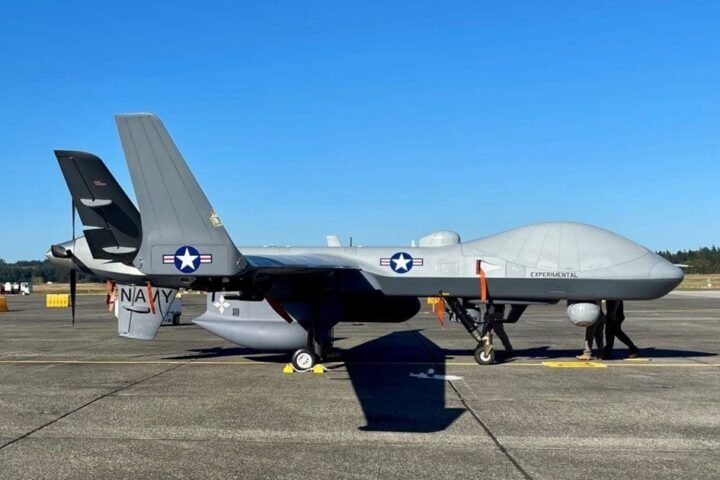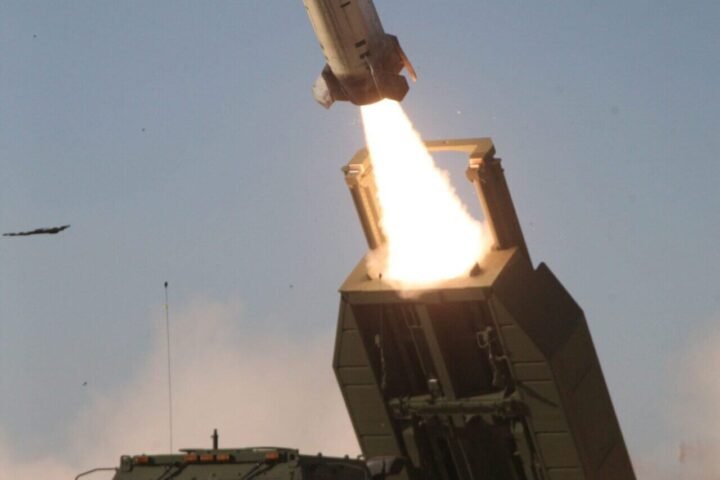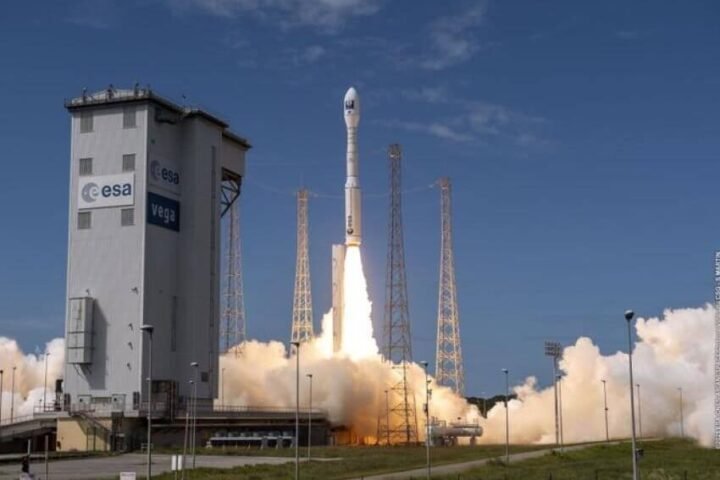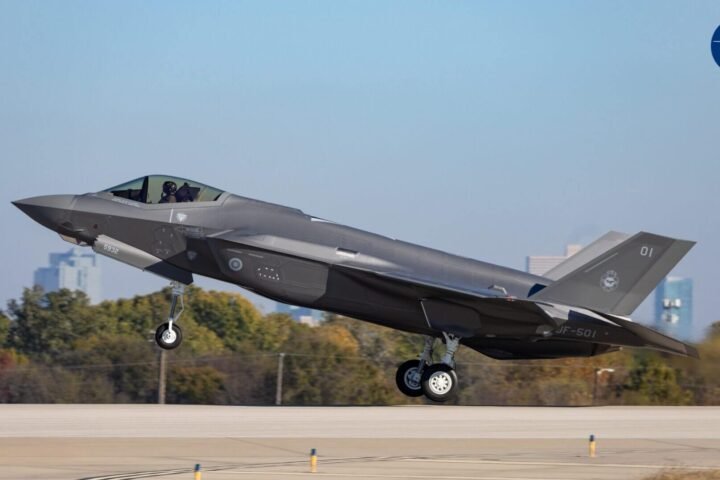
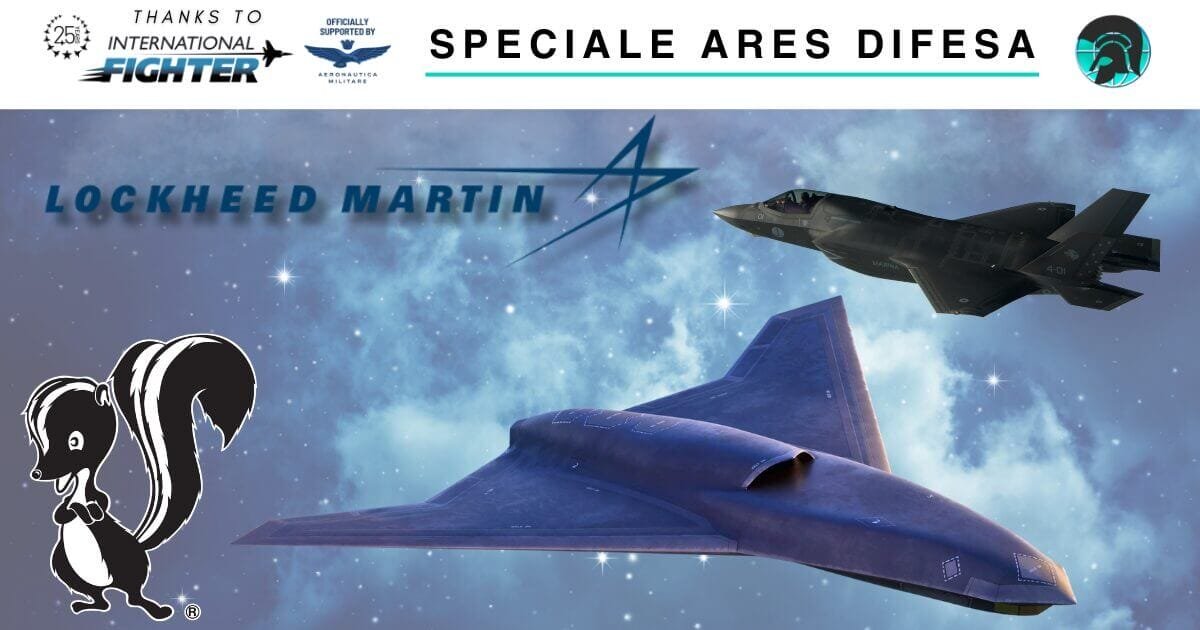
Lockheed Martin’s presentation at the International Fighter Conference in Rome provided a complete overview of present and future aerial superiority, weaving three strategic lines that define the American company’s evolution: the optimization of the **F-35 program**, the development of the **new Vectis system**, and the construction of a multi-tiered defense against **aerial threats and small drones**.
The F-35 as a Pillar of Deterrence and Interoperability

The F-35 program continues to be the backbone of the Allied Air Forces, with over **a million accumulated flying hours** and **twenty international partners**. Beyond the raw data, Lockheed has emphasized the strategic value of interoperability: various nations operating with the same aircraft, tactics (TTPs), and maintenance infrastructure, sharing experiences and solutions.
The **F-35 Users Group** is now the technical heart of this collaboration. Here, operational, logistical, and security issues are tackled, accelerating partner countries’ adaptation to the _“fifth-gen”_ paradigm. The goal is to ensure fleet sustainability and enhance integration with joint forces, turning the aircraft not just into an air superiority platform, but a **network node for situational awareness and interforce command**.
An emblematic example is found in the early days of the Ukraine conflict when **F-35s were quickly redeployed to NATO’s eastern flank**, demonstrating immediate deterrence capability and the efficiency of multinational coordination. That same ability is now tested in joint exercises as **Midnight Hammer** and **Ramstein Flag**, where the F-35 network exhibits the concrete possibility of **transferring “weapon-grade” quality data** among weapon systems and national commands, extending to ground air defense batteries.
Vectis

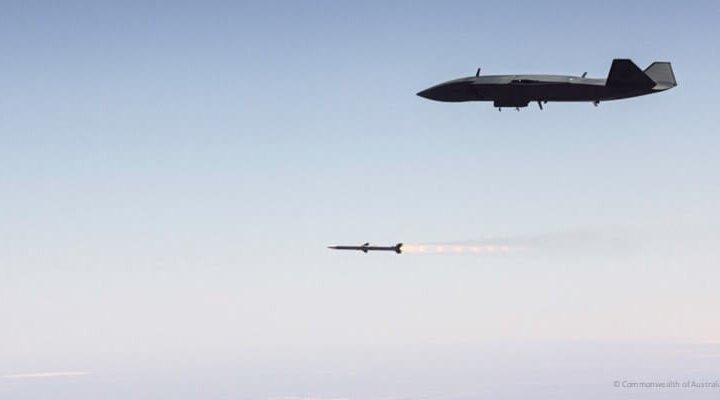
The second part of the presentation concerned the **Vectis** program, part of the RCCA Increment 2 project, Lockheed’s vision for a _“Collaborative Combat Aircraft”_ (CCA) designed to operate alongside fifth-generation platforms.
Lockheed Martin claims a historic DNA in terms of **autonomy and stealth design**, dating back to the **Polecat** demonstrator in the early 2000s. Since then, the concept has evolved towards a scalable and modular platform, built **“to cost”** and capable of being **adapted to missions based on different national requirements**.
The objective is clear: achieve **mass at sustainable costs**, integrating the survival typical of stealth aircraft with the flexibility of transport and usage of interchangeable payloads. From surveillance and target designation of mobile targets to advanced air defense, the configurations will be adaptable based on national operational profiles.
Special attention was paid to the topic of **autonomy**. Lockheed foresees a **gradual transition** towards fully autonomous vehicles, starting with **semi-autonomous solutions controlled through the _Multi-Domain Command and Control_ (MDCX) system**. The challenge, the company highlighted, is not just technological but also **political and regulatory**: in Europe, full trust in autonomous platforms will require time and training, both for operators and civil air traffic control authorities.
Airbase Defense and Drone Threat

The final strategic axis presented by Lockheed concerns the **defense of airbases against small unmanned aerial systems (C-UAS)**, a rapidly evolving sector following lessons learned from recent conflicts in Europe and the Middle East.
The proposed solution, **Sanctum**, is born from the collaboration between the **Missiles and Fire Control** and **Rotary and Mission Systems** departments, integrating sensors, artificial intelligence, and detailed fusion capabilities in an **open and scalable system**. The user interface provides a unified view (_“single pane of glass_”) of all aerial tracks, while the system automatically assigns threats to the **most suitable effectors**, which can vary from conventional kinetic systems to **high-power direct energy or microwave solutions**, according to national policies.
The goal is to create a **modular multi-tiered defense**, capable of merging data from tactical radars, national or allied sensors, and local optical systems, ensuring reaction times compatible with swarm-type threats.
Towards an Integrated Ecosystem
Lockheed Martin’s speech at IFC 2025 revealed a coherent and long-term vision: the **F-35** as an **interoperable backbone**; **Vectis** as a **mass amplifier and tactical flexibility**; and the anti-drone defense system, **Sanctum**, as a **proximity shield for the survival of critical infrastructures**.
Three distinct elements connected by the same thought architecture: **network, collaboration, and adaptability**.
A paradigm that involves not only technology but also how the allied forces think, train, and fight together.