Rheinmetall and ICEYE’s Major Commitment from Bundeswehr for the Space Sector
Rheinmetall and ICEYE have announced receiving a significant order from Bundeswehr for the space sector.
The Federal Office for Equipment, Information and In-Service Support of the Bundeswehr (BAAINBw) assigned Rheinmetall ICEYE Space Solutions to provide the German Armed Forces with space reconnaissance data through exclusive access to Synthetic Aperture Radar (SAR) satellite constellation.
To provide this capability, Rheinmetall formed a partnership with ICEYE, a global leading producer and manager of SAR satellites, establishing Rheinmetall ICEYE Space Solutions. Based in Neuss, the joint venture will deliver a high volume of SAR images through its exclusive constellation, providing a full service solution including complete operations management, ground station management, and AI-based image evaluation. The satellite constellation is owned by Rheinmetall ICEYE Space Solutions.
The current contract is worth about 1.7 billion euros. There’s also a proposed extension. The space reconnaissance data will primarily be used to protect the ‘Lithuanian Brigade’ and guard NATO’s eastern flank.
The contract will be valid from the end of 2025 to the end of 2030, with extension options. The scope of supply includes a significant number of images each day, a service that will be delivered by Rheinmetall ICEYE Space Solutions from its sovereign constellation. Production of the first SAR satellites from the joint venture is slated to start in the third quarter of 2026 at the Neuss headquarters.
The SPOCK 1 project
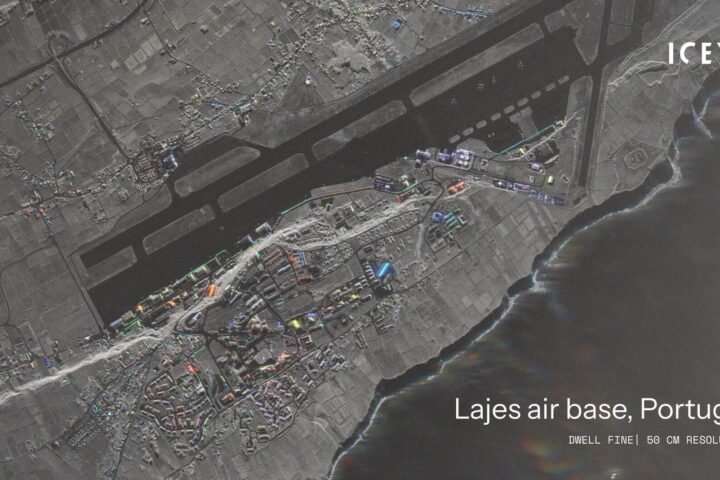
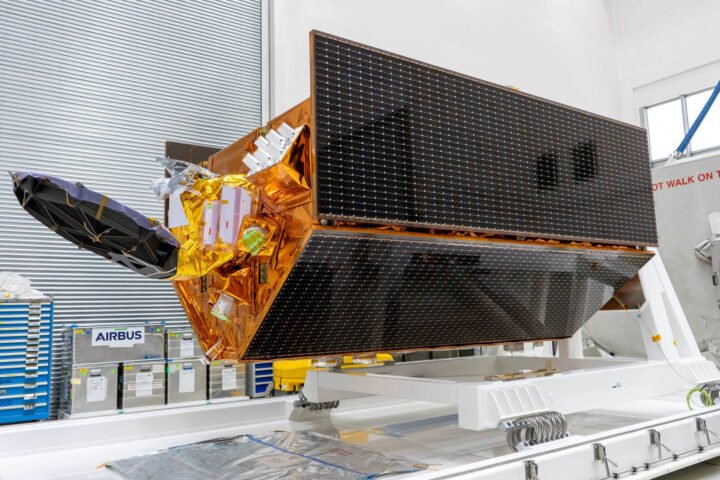
Within the Bundeswehr, the project is called ‘SAR Space System for Persistent Operational Tracking Stage 1’ (also known as ‘SPOCK 1’). SAR satellites project a powerful radar beam from the Earth’s surface from an orbit between 500 and 600 kilometers. The beam returns to the satellite in a series of pulses, which are processed to construct a detailed image of the ground below.
Since SAR technology uses radar to illuminate the Earth rather than sunlight, it is able to see through clouds, smoke, ash, rain, and sandstorms to capture images day and night, in any weather condition. This capability allows SAR satellites to collect images with a much greater frequency than traditional optical systems, maintaining coverage of rapidly evolving events. The technology can also detect minor changes invisible to the human eye, offering a resolution of up to 16 cm.
Image and information source: Rheinmetall ICEYE Space Solutions.