U.S. Navy Halts Constellation-Class Frigates, Finalizes Only Two Vessels
The U.S. Navy’s decision to terminate the Constellation-Class frigate program reflects a substantial shift in its naval strategy.
Marine Secretary John Phelan announced this on official channels, stating that the priority is now to construct platforms that are quicker to design, manufacture, and deploy. The goal is to expand the fleet timely and effectively to counter emerging threats.

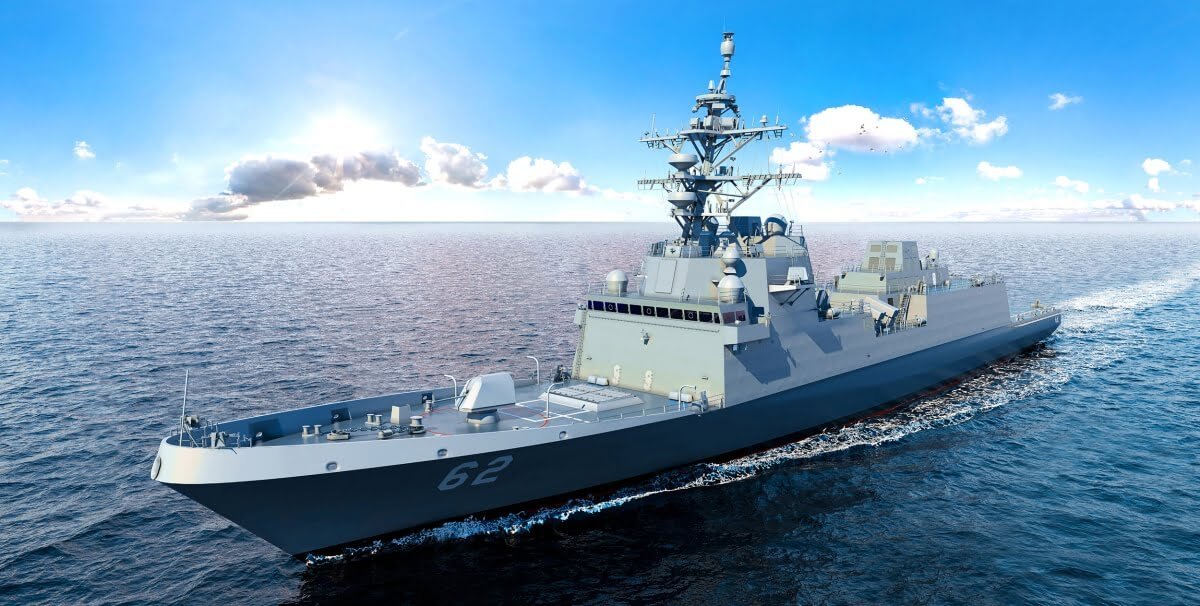
The cancelation involves the last four ships of the class, which were never initiated, while the first two, Constellation (FFG-62), and Congress (FFG-63), will continue as planned.
According to Phelan, the Navy can no longer afford programs that don’t provide immediate returns in terms of operational readiness. Each resource must be directed towards capabilities that are genuinely beneficial in facing future scenarios.
Re-thinking Naval Constructions
This new strategy necessitates a complete reimagining of how the United States intends to design and build its fleet, prioritizing speed, process simplification, and interoperability.
This decision is part of a broader reform movement that also involves the Department of Defense. Defense Secretary Pete Hegseth recently stressed the need to adopt speed as a central organizational principle. The perception, shared at the highest levels, is that the pace of threats no longer allows for extended acquisition cycles or complex programs that risk amassing structural delays.
Constellation Program
The Constellation program initially represented a pragmatic response to the limitations of the two Littoral Combat Ship classes. The Navy had chosen to adopt an existing project to accelerate the development of a new surface combatant category. However, the process of adapting the European design to U.S. standards resulted in a product different from expectations.
The integration of various requirements necessitated extensive changes to the original design, slowing production and raising costs. The result was an estimated three-year delay for the delivery of the first unit, now predicted in 2029, at a cost of about $1.5 billion.
The Silver Lining for Fincantieri Marinette Marine
For Fincantieri Marinette Marine, the decision presents a transition phase that is complicated, yet not entirely negative. The shipyard will continue the production of the first two frigates, receiving support to maintain its workforce and industrial continuity. Marinette, with roughly three thousand employees scattered across three Lake Michigan sites, is a key component of the U.S. naval industrial base. This is why the Navy confirmed its full operational status and the ability to compete for new programs.
Units Still in Construction

Discussion about what could replace the Constellation frigates is already underway. The Navy is conducting a review of its fleet design, from which will emerge the most suitable platforms for quick, scalable construction. Among the programs that might find space in Marinette shipyards are the future Landing Ship Medium and the large surface platforms without crew, both considered essential for naval operations in the coming decades. Congress will be asked to repurpose some of the unused funds of the Constellation program to finance simpler, quicker-to-produce ships.
The discontinuation of the Constellation class is an indication of a significant transformation. The U.S. Navy seeks ships that can be quickly built, adaptable, integrated with modern digital systems, and most importantly, available in sufficient numbers to sustain competition with adversary powers in increasingly high-tech contexts.