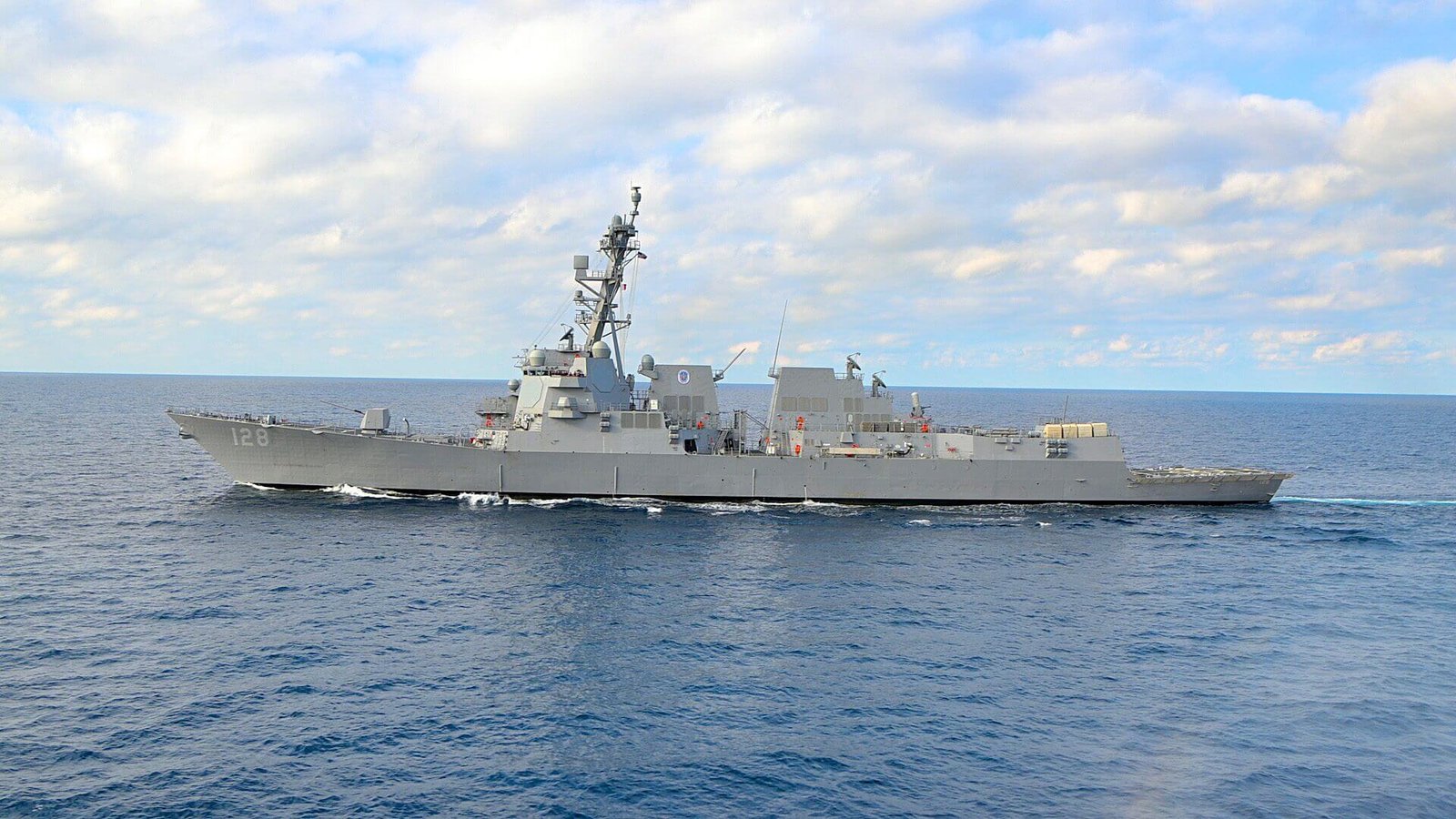
The Ingalls Shipbuilding division of Huntington Ingalls Industries (HII) in the United States has successfully completed the final phase of sea trials for the Arleigh Burke-class missile destroyer, the USS Ted Stevens (DDG 128).

The Ingalls Test and Trials team spent several days in port and at sea conducting a full series of acceptance tests and evaluations, under the supervision of the US Navy’s Board of Inspection and Survey (INSURV).
These trials confirmed that the ship has demonstrated the required mission capabilities successfully, preparing it for delivery to the US Navy in the coming weeks.
The Arleigh Burke Class Flight III
The DDG 128, the second Arleigh Burke-class destroyer of Flight III built by Ingalls, represents the new generation of surface combat ships for the United States Navy.
The Ted Stevens is equipped with the second radar system of Flight III Class, the AN/SPY-6(V)1, and the Aegis Baseline 10 combat system, designed to counter threats into the 21st century.
The new radar, also known as the Air and Missile Defense Radar (AMDR), can detect ballistic missiles (Ballistic Missile Defense), cruise missiles, enemy aircraft (Air Defense), surface ships, and submarine snorkels simultaneously.
The Arleigh Burke-class missile destroyers are multi-mission surface ships able to conduct anti-air and missile defense (AAW), anti-submarine warfare (ASW), and anti-surface warfare (ASuW); they also play a significant role in long-range precision attacks on ground targets with the BGM-109 Tomahawk missiles they are equipped with.
The Construction Program
To date, Ingalls Shipbuilding has delivered 35 Arleigh Burke-class destroyers to the US Navy, including the first Flight III destroyer, the USS Jack H. Lucas (DDG 125).
Currently, Ingalls has five more Flight III destroyers under construction: Ted Stevens (DDG 128), Jeremiah Denton (DDG 129), George M. Neal (DDG 131), Sam Nunn (DDG 133), and Thad Cochran (DDG 135).
Source and photo credit: Huntington Ingalls Industries (HII)